The disruptor Jaguar’s Type 00 concept
Jaguar’s most talked-about rebrand in recent history is more than just viral hype. Here, the team reveals how the new Type 00 Design Vision concept came to be and what it signifies for the British marque’s future legacy.
Last year, when Jaguar launched its new, vibrant, all-electric and, importantly, high-end, low-volume era to the world, you might say it caused a bit of a fuss. By now, you’ve likely seen the social media drama, read all the hot takes and maybe had a few opinions yourself. While the virality itself may have been accidental, the creative, design-first strategy breathing life into the storied car brand was a planned disruption, amid a time when many industry storms swirl. To the north were enthusiasts lamenting the electric vehicle landscape and pleading for emotion and originality to return to cars; to the south was a new luxury consumer unshackled from the nostalgia of generations past and whose poster-cars of the future are found in video games, sci-fi and digital spaces. And coming head-on at a very fast pace are new marques from China that arrive without the cultural or storytelling cache luxury utilises elsewhere but are reframing affluence through technological advancements. We live in interesting times for any car brand attempting to please everyone; it’s lucky then, Jaguar doesn’t intend to.




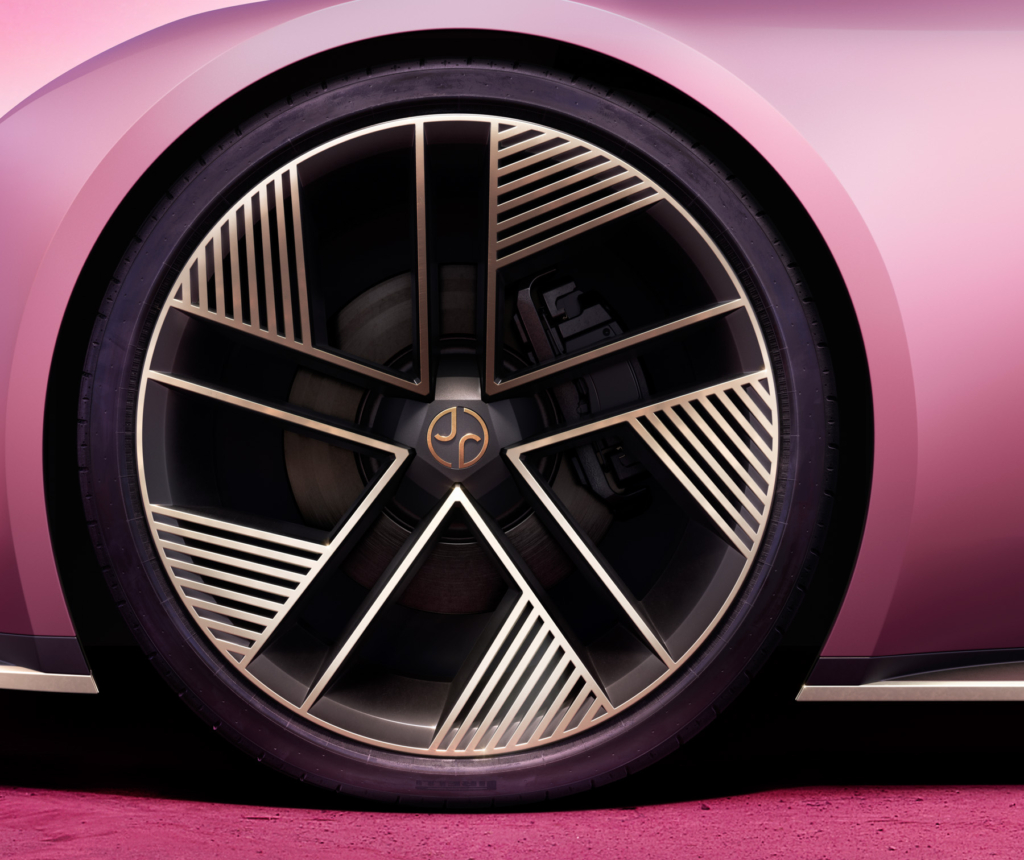
“This desire to want to be loved by everybody will kill you because you just end up with mediocrity,” says JLR’s chief creative officer, Gerry McGovern, the night after the big reveal of the new Jaguar Type 00 Design Vision concept at Miami Art Week. “It needs to be disruptive, or it doesn’t have a future.” For all the attention and criticism, he just might be onto something here. As seen in its distinctive concept, Jaguar is placing its chips on the creative merit to be found in the shock of the new. With its dramatic and sculptural silhouette, long bonnet, sweeping roofline, butterfly doors, futuristic render-like surfaces and fierce presence, the Jaguar Type 00 Design Vision concept electric roadster has already pressed a few people’s buttons. It defies the physicalities of a high-performance EV, pushes against the tide of retro-mod expectations and, in reconceptualising the idea of aspiration in the future, adopts a refreshing take on Jaguar’s history in the same way fashion houses reinterpret their codes. Jaguar says it’s channelling a philosophy penned almost 90 years ago by its founding father, Sir William Lyons: ‘A Jaguar should be a copy of nothing.’ But it’s also resetting the mood with a strategy we’ve seen it do before with the now-iconic E-Type: a method of futureproofing through design, art and, as McGovern tells us, a hefty flourishing of modern exuberance.
In recent years, Jaguar’s parent company JLR has been undergoing a not-so-quiet transformation, starting with the relaunch of Defender in 2019, which also incited outrage from Land Rover purists for its futuristic design at launch. Then came Range Rover, and as JLR began to reposition itself within the luxury space and brought its design and creative teams together under one ‘house of brands’, Jaguar followed. Taking the shifting landscape across automotive, consumer ideals and design as a luxury signal, McGovern wanted to pull the brand right back to its bones for a total refresh and reintroduce Jaguar to a new generation. This meant a total rethinking of the internal creative process and pushing the noise of nostalgic expectations to the side. Or as McGovern tells it, “a major shakeup was needed.”



Around four years prior to the Type 00’s reveal, he held an internal design competition inviting JLR’s team to develop concepts that reimagined a future for the marque that everyone could align on. “There were three groups and a huge number of concepts that were created, and I think nearly 20 full-size models were all displayed,” recalls Richard Stevens, JLR brand design director – not a rare practice within a design centre, but a new way of working for Jaguar. “They were all presented to Gerry and the board, and everyone voted. No one knew which team had worked on what, and it was unanimous. So, with Type 00 and its sister vehicle, there wasn’t anyone that didn’t go with that direction.” In the next year, Jaguar will reveal the first of these three sister production cars, starting with a four-door, luxury GT, which has been developed completely in tandem with the concept; a sign that what you see here isn’t just another flashy concept doomed to haunt what could have been, guiding the future of the marque’s DNA. “This was never about a concept car in isolation from anything that will be put into production,” says Stevens, noting that McGovern, as a design head, does have long a history of producing road cars as close to concept as possible. “[The concept and the GT] have been designed in parallel, so when you walk through the Jaguar design studios, you see Type 00, but you also see what will be the first manifestation of [the road car]; and I think there is real confidence that when people see what comes out on the road, it will be a copy of nothing.”
Aside from the use of the historic ‘Type’ nameplate, the Type 00 concept’s London Blue hue – referencing one of the most famous E-Type paint colours – and its dramatic, exaggerated silhouette nod to its sports cars of the past. The new era of Jaguar takes most of its inspiration from the lifeblood of the marque: youth, emotion and performance, with an overlying garnish of that British, give-no-fucks sense of creativity that often elicits controversy in the very best way. After all, the most iconic Jaguar cars have always reflected the culture of their time. Think the postwar optimism of the XK120, the D-Type’s place in the golden era of motorsport, the E-Type as a ’60s sexual revolution icon, how the XJ220 became the supercar of the power lunch generation, the 2000s rebirth of British cool and the F-Type and, most recently, the I-Pace as an early pioneer within the EV-as-a-status-symbol shift. Type 00, in its fierce boldness, cool and audacious absurdity and digital render-like surfaces is a perfect poster-car of the times.



“For us exterior designers, capturing the essence of Jaguar was key,” says Tino Segui, Jaguar’s chief exterior designer. “We wanted to bring in those outstanding proportions, that presence, that character that have been defining the heritage of our brand … For us, it’s been very important to take a fearless approach. We want to be bold and redefine Jaguar in a very exuberant way.” The dynamic shape pushes against the high-riding, stub-nosed shapes we’ve seen on many new EVs, and it’s worth noting that the platform, which underpins Type 00, came second to the design of the car. The feline ‘leaper’ – which has also been reimagined – can be found laser-etched into hand-finished brass ‘ingots’ on each side of the car. Like the charging port and air intake, these deploy when needed to reveal rear-facing cameras. Segui says the deployable tech was a choice the design team made to keep the purity of the design intact. Aside from the use of bold colours and a new ‘strike-through’ horizontal line signature, materiality also plays a key role in Type 00. Inside, there’s more deployable technology via screens that can slide away; cool, travertine stone is used as a plinth down the central spine, and wool-blend textiles mimic handwoven yarns, resulting in a lovely contrast between ideals of the future and the past. While not all of these elements will make it to the GT, it will be an interesting journey to see how the creative approach and overall atmosphere seen here will be reinterpreted for the road.
In a similar vein to the response to Defender, by far the loudest critique of Jaguar’s rebrand has been around preserving the legendary marque’s heritage – with many design and car lovers asking why a retro-mod was never on the table. As Rawdon Glover, Jaguar’s managing director points out, living in the past was never an option. “Jaguar as a brand has a very, very rich history, whether it’s the [racing] wins or the iconic individuals associated with our brand, from Steve McQueen to Lady Diana,” he says. “However, we must not be a heritage brand. Jaguar has to be forward-looking.” Glover notes that Jaguar instead wanted to look to the way fashion, watches and architecture evolve while respecting the DNA, provenance and storytelling of its past. “We are the custodians of the Jaguar brand, and we need to make sure that it’s relevant, it’s desirable and it’s sustainable for the next 90 years of its history.” He adds, “in that context, sometimes being a custodian of the brand means you need to make small incremental changes. But with so much disruption and change happening in the industry at the moment, particularly around electrification, we need to do something much bolder than that. We need to peel away the layers of the brand and look at the essence of what it is to be a Jaguar and reimagine that for a 21st-century electrified future.”