The Eames House
It’s an enduring landmark of American modernism. But The Eames House is also a salient reminder of the multifaceted genius of its creators, Charles and Ray Eames.
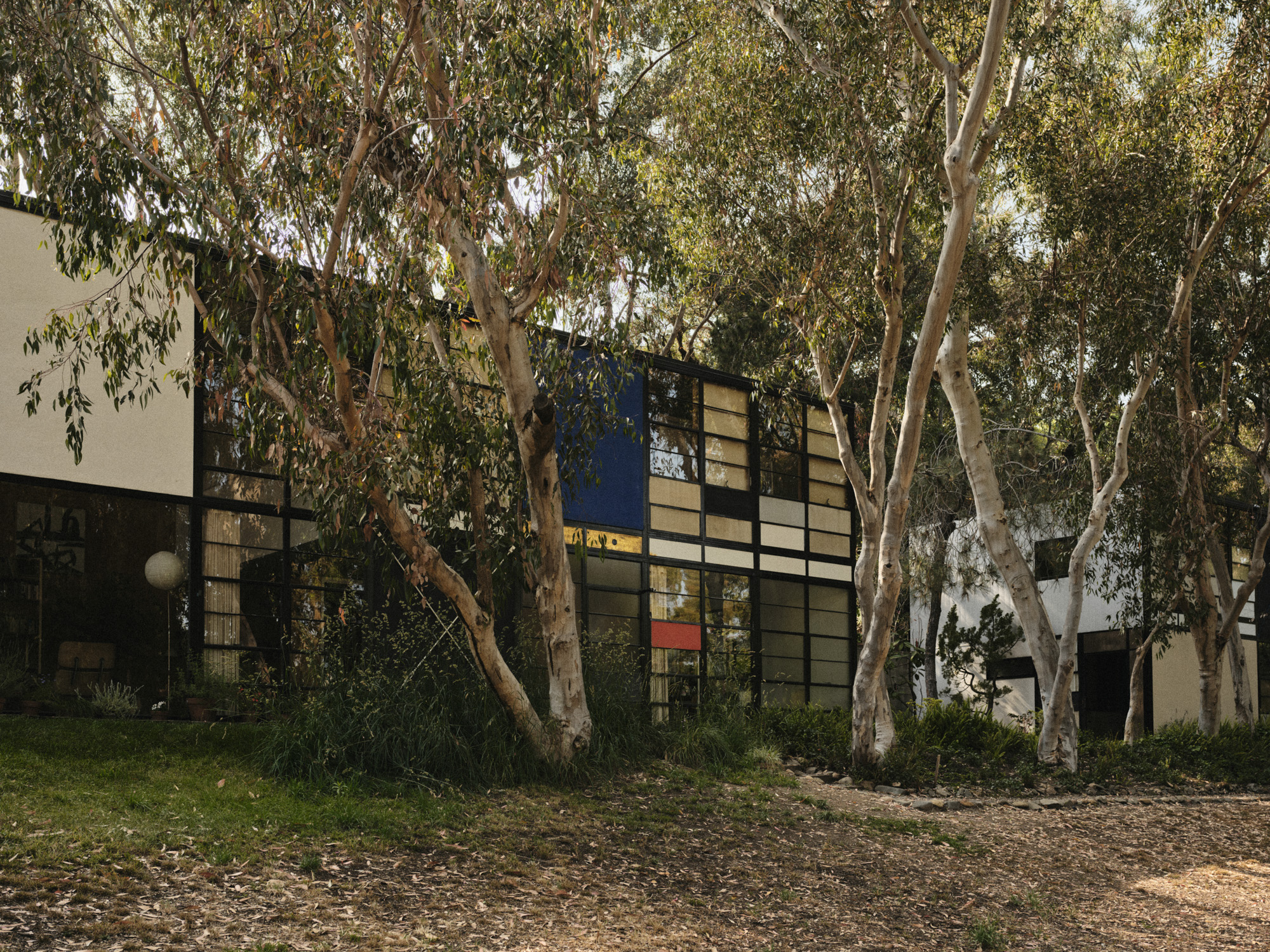
The Eames House, or Case Study House #8, was built in 1949 as part of the Case Study House Program – an initiative conceived by John Entenza, the editor of Arts & Architecture magazine, which invited eight architects to rethink the parameters of modern living in post-war America. Together with their friend and regular collaborator, the Finnish-American architect Eero Saarinen, Charles and Ray Eames designed and built Case Study Houses #8 and #9 on a hillside in Los Angeles’ Pacific Palisades neighbourhood.

The former is a modular home consisting of a pair of two-storey structures: a residence and a studio separated by a courtyard. It encapsulates the Eameses’ spirit of curiosity and clarity of purpose, and it exists today as a built manifesto for their pioneering approach to design. Eames Demetrios, the couple’s grandson and chairman of the Charles & Ray Eames Foundation, alongside his four siblings, describes the house as a lens: “You can see almost every aspect of their work through it – the objects, the story, the philosophy – and that’s very powerful,” he says.
The project was completed in December 1949 (construction spanned 10 months, although the steel frame and foundations were completed in roughly a day) and the two lived there for the rest of their lives. “We always want people to remember that it’s an icon of modernism, but it was also a home,” Demetrios says.
The meadow surrounding the home, the structure and many of the objects within remain largely intact, thanks to decades of preservation led by the second and third generations of the family. “It’s unique because the grounds, the structure and the objects are all original,” Demetrios notes. “When you’re in the meadow, you’re very much having the same experience they had.”
These preservation efforts, including a partnership with The Getty Conservation Institute and the foundation’s Conservation Management Plan, ensure the house’s longevity and continued significance as a cultural icon. This mission was pulled sharply into focus in January 2025 when the house narrowly survived the Palisades Fire: it sustained considerable smoke damage and was consequently closed to the public for five months. “Some of the most gracious people in the world are the people from the Palisades who lost their houses and would say to us, ‘We’re glad your house survived.’ So it’s a big responsibility,” Demetrios says.
Adrienne Luce, executive director of the Charles & Ray Eames Foundation, carries this responsibility with a deep sense of stewardship, explaining that the devastation caused by the fire prompted a profound rethinking of the meaning of preservation. “It was a privilege and a responsibility to pivot our mission and leverage Charles and Ray’s ideas to inspire new thinking around community rebuilding and resilience,” she says.
The foundation has worked to fire-harden the site through tree removal and replanting, specifically replacing some of the eucalyptus trees with hardier native species, and is participating in the Case Study Adapt program, a rebuild initiative founded in the wake of the fire by Leo Seigal, founder and CEO of The Expert, and entrepreneur Dustin Bramell, who lost his home.
Backed by some of LA’s leading architecture firms including Marmol Radziner, Walker Workshop and Bestor Architecture, the initiative takes cues from the original Case Study Program through its emphasis on efficient and cost-effective modular architecture. However, as Demetrios notes, while the original program focused on modernism and post-war technologies, its new counterpart places resilience at the centre.
Essential as it is, the house is but one element of the Eameses’ extraordinary design legacy. They are credited with some of the most innovative material explorations and iconic design pieces to emerge last century. However, their creative output is far more expansive: it also encompasses photography, filmmaking, textiles, toys and exhibitions.
“People know the chairs, they may know the house, but they might not know about the films, the photographs, the exhibition design and the cultural diplomacy,” Luce says. “It’s an incredible design legacy, and everybody seems to have an entree. Every time I have a conversation with someone, they connect to some part of it.”
Crucially, Charles and Ray didn’t merely tinker in these secondary fields; they excelled in them, bringing the same level of rigour and creative ingenuity to every project produced by the Eames Office – from the 100 or so films they made to their Solar Do-Nothing Machine, a kinetic device that demonstrated solar energy with the couple’s hallmark playfulness. “They not only made major contributions to many different facets of design – even things we don’t always consider design – but they did so always at the top of their game, always focused on helping make things better,” Demetrios says. Highlighting the multidisciplinary nature of their design approach underpins much of the foundation’s mission today. It recently presented Eames Architecture, a program dedicated to their architectural work, and next year, it will reintroduce Powers of Ten – their pioneering educational film – in celebration of its 50th anniversary.

The couple’s creative rapport exuded a “beautiful synergy,” says Demetrios. They were equal partners, and the combination of Charles’ architectural background and Ray’s artistic fluency enriched their collective output. They designed with humanity and rationale at the centre, constantly seeking to bridge emotion and intellect. Importantly, they viewed their work as a process of learning, were committed to modelling solutions that others could adapt and saw failure as generative.
Their revered LCW chair is a prime example. Originally conceived as a single piece of moulded plywood, the material was too weak, forcing the Eameses to split the seat and backrest into two pieces connected by a curved spine. This concession gave the piece its elegant yet utilitarian identity, which ultimately led to its status as a design icon. “They knew to harvest from the work,” their grandson says.
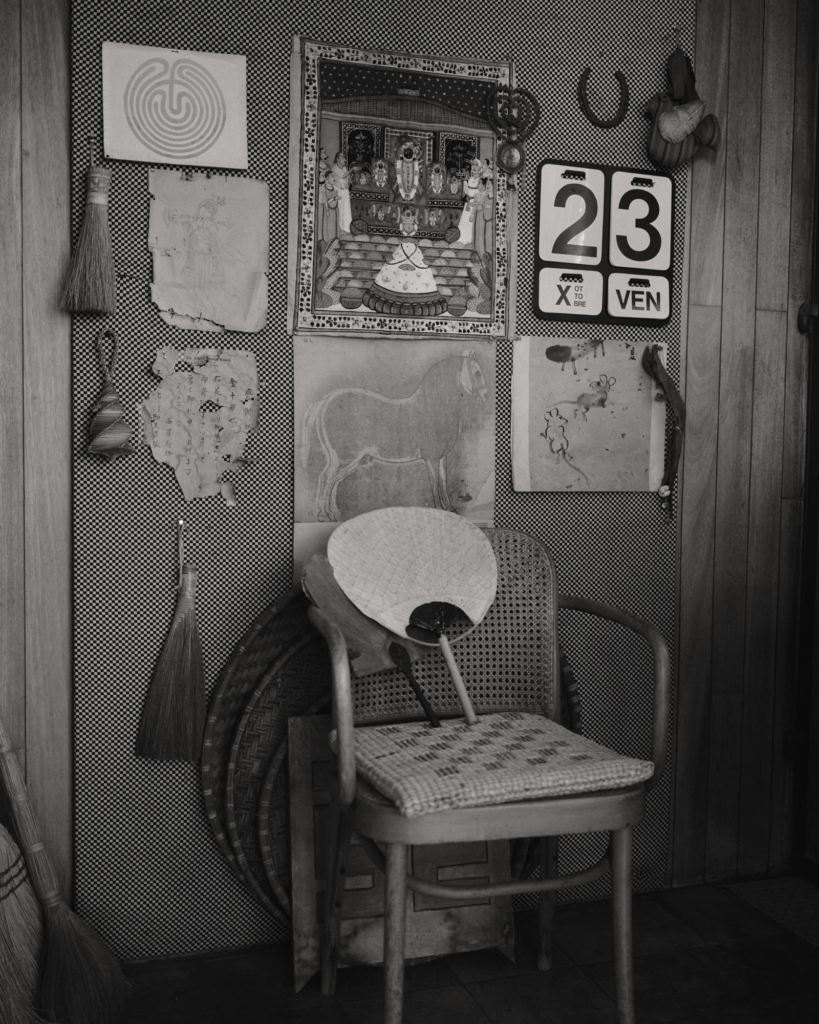

The Eames House is at the heart of this profound legacy. Throughout Charles and Ray’s lifetimes, it was a seedbed for ideas, a place to ruminate and to cultivate creativity among themselves and their peers, as well as being an ever-evolving backdrop to their lives. Its continuing existence is a triumph on many levels, and an opportunity to visit is one to be seized.
The Eames House offers guided and self-guided tours. For more information, go to eamesfoundation.org/eames-house/visit.