The French Exit and Le Royale
On the corner of Mary and Edward Streets in Brisbane’s CBD, hospitality group Anyday has teamed with interior designer Tamsin Johnson to do something delectably unique: give one heritage building two new personalities.
At street level, The French Exit leans into the classic indulgences of a Parisian bistro – wine, butter, close-set tables, candlelight and the ease of a long lunch or lively dinner. Upstairs, Le Royale picks up where the meal left off, turning the same address into a moodier, more escapist offering built around cocktails, music and the desire to linger for longer.

The pairing works because neither venue feels like a variation on the other. Instead, one gives way naturally to the next, with the historic building setting the tone. Anyday co-founder Tyron Simon says he “fell in love with the building almost immediately”, describing it as unique for Brisbane, with heritage details, generous proportions and natural light that helped guide the direction of the spaces. Rather than impose a concept on each, the idea was for Johnson to work with what was already there – an approach that gives both venues a sense of belonging to the city. “Tamsin is incredibly gifted,” Simon says. “There is a timelessness to her work that sits comfortably within heritage architecture. She has a wonderful ability to create rooms that feel both beautiful and relaxed.”
For Johnson, the challenge was to make the spaces feel kindred but clearly independent in mood. “They are both environments that transport you – intense, rich and layered,” she says. “The French Exit possesses a more homey sense of comfort and some nostalgia, without anything saccharine or too theatrical, while Le Royale is about intrigue, a darker setting, a bit more volume, but with the lights down.”
Conceived as an ode to Paris, The French Exit is, as Johnson says, “something French in feel yet proudly Australian in execution”, with the spirit of a French bistro translated through the character and proportions of an Australian heritage building. With butter-yellow gloss walls, dark timber cladding, parquetry floors, brass bar stools, tan leather banquettes and lace curtains, the dining room feels warm without being excessive. Seating up to 80, the space captures the ease, intimacy and charm that make the best eateries feel timeless.
It’s exactly the kind of venue Anyday envisioned: one animated by the sensory pleasures of bistro dining, from clinking cutlery and glassware to the hum of conversation and rich aromas drifting from the kitchen. The menu follows the same logic, honouring the heart of French cuisine through a purposeful, modern lens, with classic dishes such as steak frites, duck à l’orange, escargot and ananas givré.
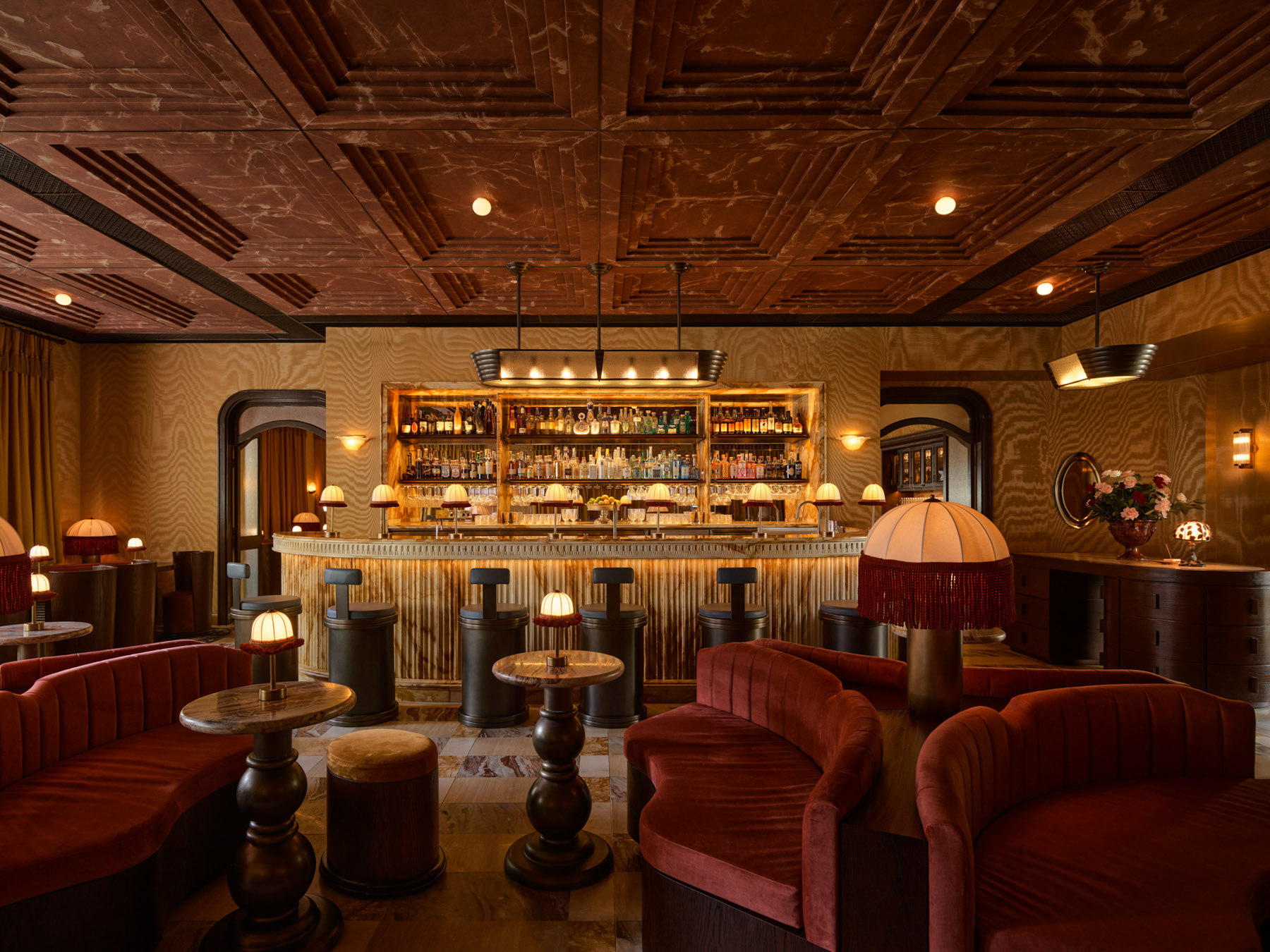
Then comes the shift upstairs. Johnson describes a literal transition via the curved, stone-clad staircase, which carries guests from The French Exit into a more vibrant after-dark world. At Le Royale, the palette deepens and the detailing intensifies: tan leather gives way to burgundy banquettes, linen curtains become velvet drapes over arched windows and paint yields to silk moiré walls that shimmer under the glow of filtered light. Anchoring the room is a carved Giallo Siena marble bar, wrapped around a wall that divides the space into east and west wings. Mirrors, floral carpet and tasselled lamps heighten the sense of theatre across the cocktail bar, which can hold 120 guests. “When a venue is humming – people drinking, laughing, music in the background – it takes a strong space to sit comfortably within that energy,” Johnson says.
Le Royale radiates confidence – it is, Johnson says, “a rich space, told with textural collision and intensity”. As she explains, “This was also about creating that warmth, seclusion and comfort. Some real intrigue. A very transported sensation that serves as a total and utter escape from the familiar light-and-bright Brisbane.” It’s a fitting description of a bar that is equally shaped by atmosphere and sound, where house bands put a sly spin on pop classics, giving the room its own pulse.


Simon describes the relationship between the two venues simply: “One anchors the evening and the other allows it to continue. At the same time, they can stand entirely on their own… but when people choose to enjoy both, the experience becomes something more complete.”
The French Exit and Le Royale aren’t competing identities set under the same roof; instead, they are complementary ones. The former is built for warmth, ritual and gastronomic pleasure, while the other is for spontaneity, music and extending the night. They’re unified, too, in their ability to “allow you to leave Brisbane for just one night”, Johnson notes. Though hospitality is often discussed in terms of openings and concepts, these venues feel more lasting than that; these are places with presence, character and a sincere understanding of how people want to feel in them.


