Waring Residence
Waring Residence rethinks domestic luxury in Los Angeles through compact planning, natural light and refined materiality.
In Los Angeles, where domestic ambition is so often equated with scale, Waring Residence offers a quieter and more deliberate proposition. Designed by Avi Galili Architects, the newly completed home sits on a compact 250-square-metre (2700-square-feet) lot and pushes back against the oversized residential developments that have come to define much of the city’s housing landscape. Instead, it proposes that architectural quality can be found not in size, but in the clarity, intention and depth of the spaces within.
As Avi Galili explains, the home was conceived as “a direct counterpoint to the oversized residential developments that dominate Los Angeles”. In doing so, the project challenges the notion that value is tied to scale, asserting instead that “the quality of space is defined by the clarity and intention of its program – not its size”. It is a compelling idea, and one that finds clear expression in every aspect of the home’s planning, form and atmosphere.
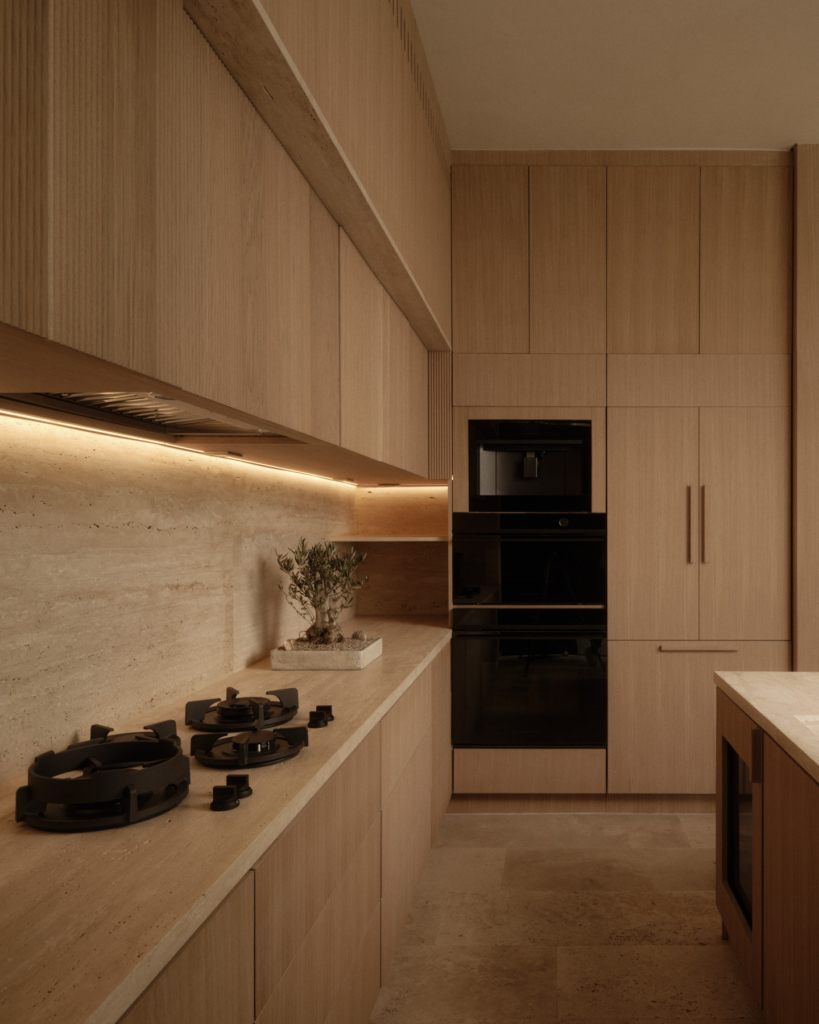
Working within a tightly controlled 120-square-metre (1,300-square-foot) buildable perimeter, the design is driven by efficiency and solar orientation. A taller south-facing great room anchors the home, opening fully to the rear yard to pull light deep into the interior while extending volume and dissolving the boundary between inside and out. Material continuity plays a crucial role in reinforcing that sense of expansion. Travertine begins at the entry and runs through the residence before extending beyond as pool coping, visually connecting architecture and landscape.
The project challenges the notion that value is tied to scale, asserting instead that “the quality of space is defined by the clarity and intention of its program – not its size”.
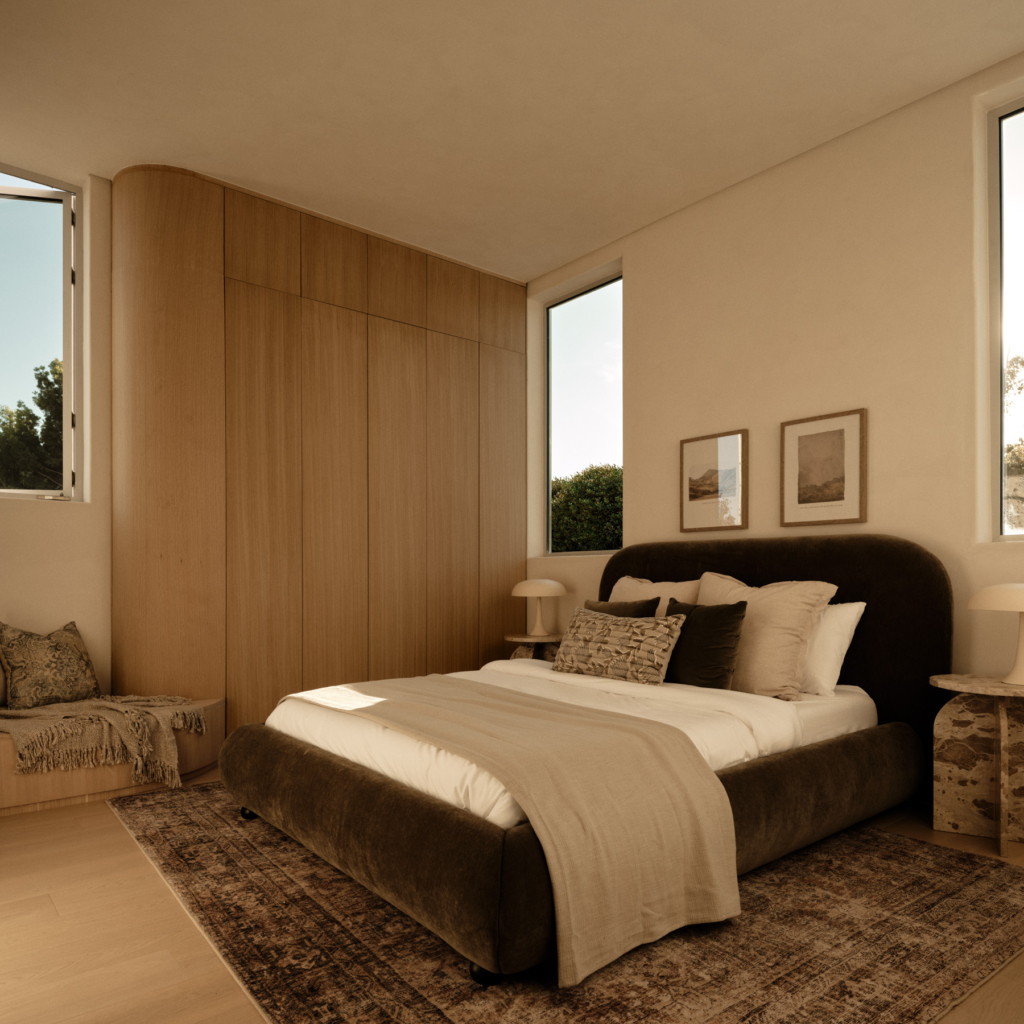
For Spanish architect Carlos Peraita, who was interior designer on the project, these moments of spatial and material continuity became central to the experience of the home. “It has been fundamental to create authentic moments of presence and intention throughout the design,” he says. “These have become the real luxuries of contemporary living. We are at this sweet spot where a new generation of houses can arise in LA. Oversized rooms and glossy finishes can be substituted by spaces of real intimacy – for the benefit of the household and, in turn, the city as a whole.”
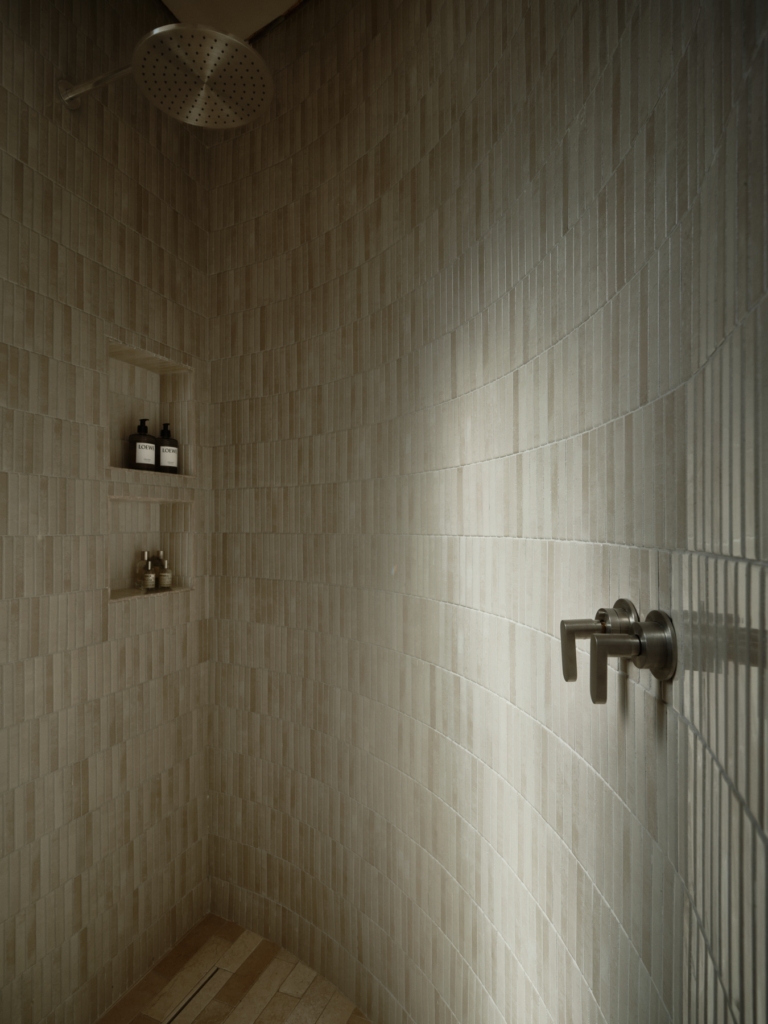
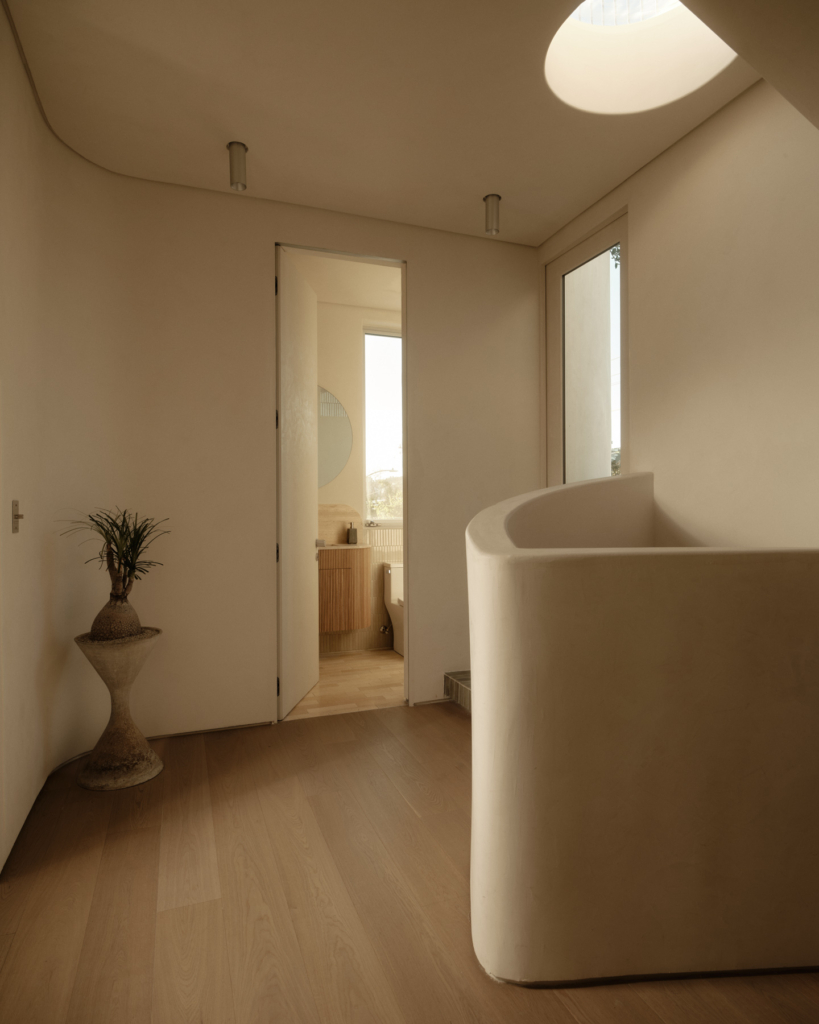
That sensibility is reinforced by what Peraita describes as a system of “two families: curves and cuts”. Curved surfaces in soft, opaque materials guide a continuous spatial sequence, while glazed thresholds introduce moments of transparency where the exchange between inside and outside occurs. Subtle curved walls and ceilings further soften transitions, allowing the house to read not as a collection of rooms but as a fluid and continuous volume.
“It has been fundamental to create authentic moments of presence and intention throughout the design.”
The project’s level of refinement is also a reflection of the close involvement of developer and builder Premise, led by Rowan Kelshaw and Mitchell Ciccomascolo, whose investment in the final material and finish selections helped shape the character of the home. Rather than treating delivery as a purely technical exercise, their hands-on approach ensured the architectural and interior intentions were carried through with consistency and care, contributing to the residence’s overall sense of cohesion and restraint.
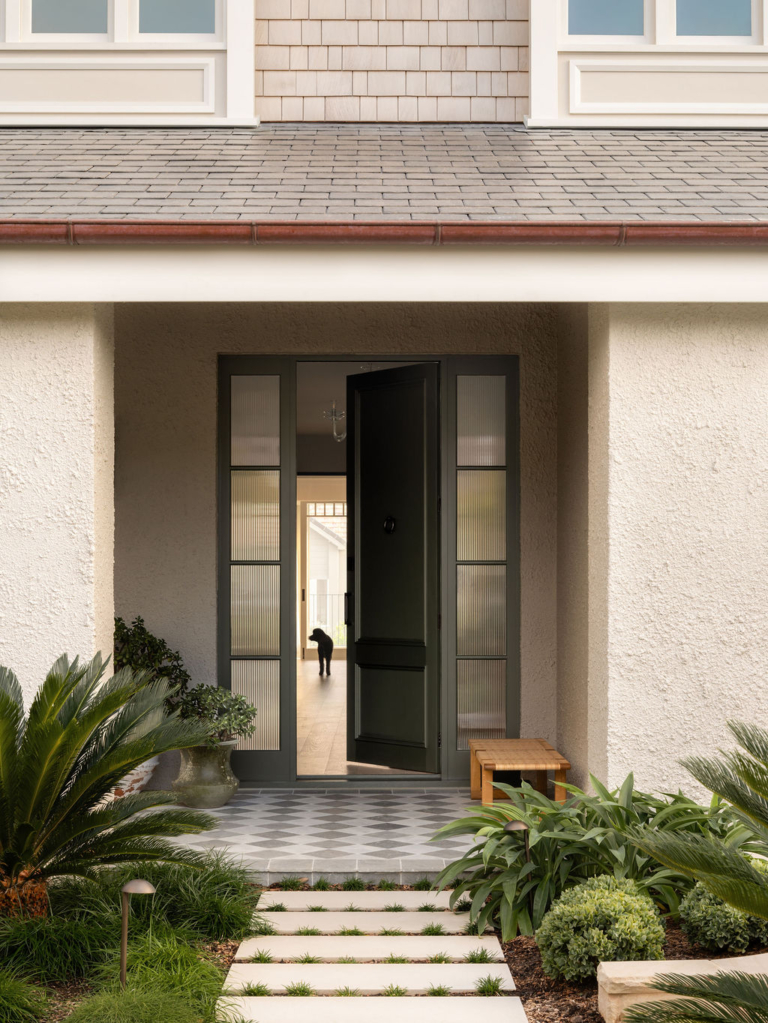
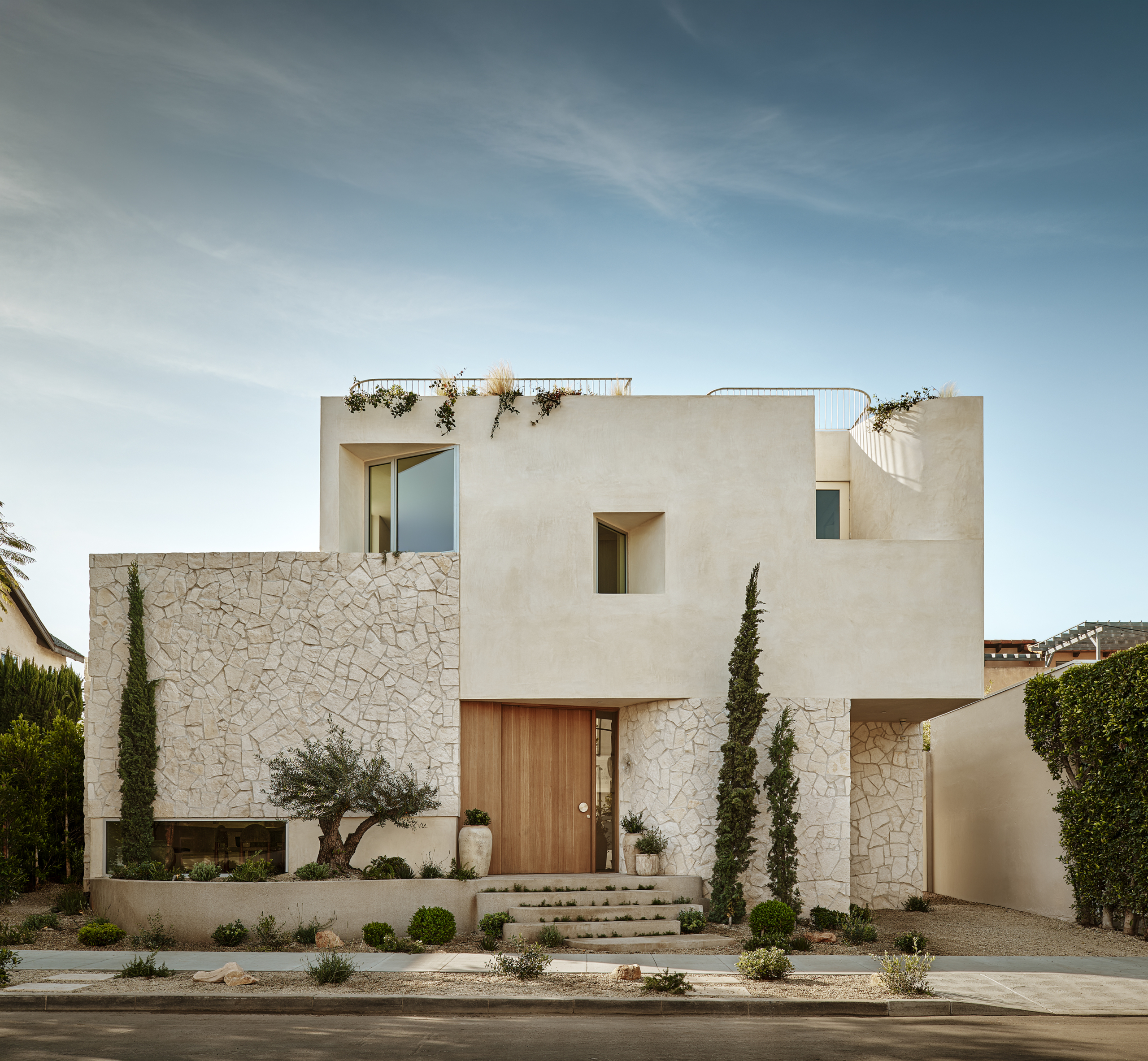
Externally, the architectural language is equally resolved. Rather than defaulting to the familiar two-storey box, Galili approached the mass “as something to be carved rather than composed”. Porosity became the organising principle, expressed through a curved entry, a carved-in carport, planted recesses and an external path to the roof deck. Angled openings puncture the facade to frame views and control the movement of light, while a rough stone-clad base establishes a strong horizontal datum beneath the smoother plaster volume above.
Looking back, Galili sees the home’s constraints as its greatest strength. “The project doesn’t try to disguise its constraints – it leverages them to create a more distilled and focused spatial experience.” In Waring Residence, that discipline gives rise to something increasingly rare in Los Angeles – a home whose luxury lies in restraint, resolution and the precision with which space is made.