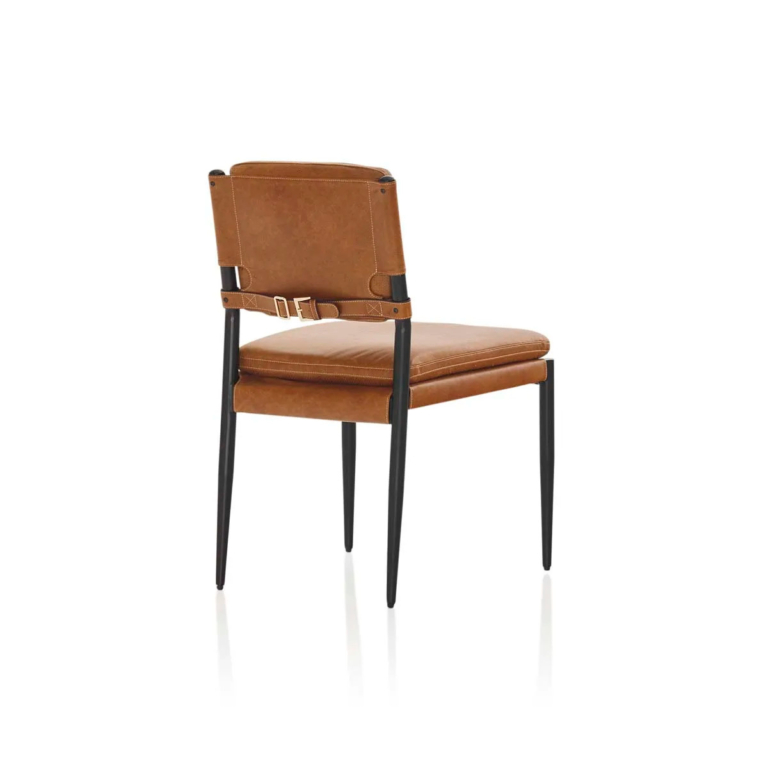
The Ozzy dining chair is versatile in use, original in design and meticulously crafted. With its scaled-down proportions, Ozzy is a nomad at heart, ready to migrate from one room in the home to another.
Distinctive feature of the Ozzy dining chair, as with the eponymous ottoman and armchair, is the cowhide-clad outer backrest that can be paired, in an array of elegant combinations, with the seat upholstery, available in leather and fabric. The dining chair features a metal swivel base and solid wood legs in a variety of finish colors.
Structure in metal and molded polyurethane foam covered with a protective laminated fabric. Outer backrest in metal clad in cowhide in colors
Swivel base with return in metal painted black and solid woos. Metal screws with burnished finish combined with structure in wood; or matt titanium 710 finish combined with structure in wood.
Upholstery non-removable in both the fabric and leather versions
After completing design studies at the ESDI design school in Spain, Patrick Norguet began work with Louis Vuitton and thus made his debut in the world of fashion. Through these experiences, he gained an understanding of brand identity and how to highlight it. He quickly broadened his design capabilities and took a keen interest in the technological innovations in the furniture industry. In 2000, he designed his first objects and quickly expanded his visibility, thanks to the international media. He then opened his own studio in Paris. Italian companies took note of his meticulous approach and total commitment to his designs. Enthusiastic about industrial processes, he adapted his style to complement the skilled artisan craftsmanship, while optimizing the efficiency of production methods. His first furniture collections for international and French brands established his place in design, ensuring his presence at international trade shows. Norguet effortlessly masters all types of design and has become a key figure in French design. From the drawing table to industrial tools and communication, he has demonstrated the place and responsibility of the designer as an agent of change in services and lifestyles.
The Ozzy dining chair is versatile in use, original in design and meticulously crafted. With its scaled-down proportions, Ozzy is a nomad at heart, ready to migrate from one room in the home to another.
Distinctive feature of the Ozzy dining chair, as with the eponymous ottoman and armchair, is the cowhide-clad outer backrest that can be paired, in an array of elegant combinations, with the seat upholstery, available in leather and fabric. The dining chair features a metal swivel base and solid wood legs in a variety of finish colors.
Structure in metal and molded polyurethane foam covered with a protective laminated fabric. Outer backrest in metal clad in cowhide in colors
Swivel base with return in metal painted black and solid woos. Metal screws with burnished finish combined with structure in wood; or matt titanium 710 finish combined with structure in wood.
Upholstery non-removable in both the fabric and leather versions
After completing design studies at the ESDI design school in Spain, Patrick Norguet began work with Louis Vuitton and thus made his debut in the world of fashion. Through these experiences, he gained an understanding of brand identity and how to highlight it. He quickly broadened his design capabilities and took a keen interest in the technological innovations in the furniture industry. In 2000, he designed his first objects and quickly expanded his visibility, thanks to the international media. He then opened his own studio in Paris. Italian companies took note of his meticulous approach and total commitment to his designs. Enthusiastic about industrial processes, he adapted his style to complement the skilled artisan craftsmanship, while optimizing the efficiency of production methods. His first furniture collections for international and French brands established his place in design, ensuring his presence at international trade shows. Norguet effortlessly masters all types of design and has become a key figure in French design. From the drawing table to industrial tools and communication, he has demonstrated the place and responsibility of the designer as an agent of change in services and lifestyles.