Balam Balam Place
Designed by Kennedy Nolan in collaboration with Openwork and Finding Infinity, Balam Balam Place is a cultural and community hub in Melbourne’s Brunswick.
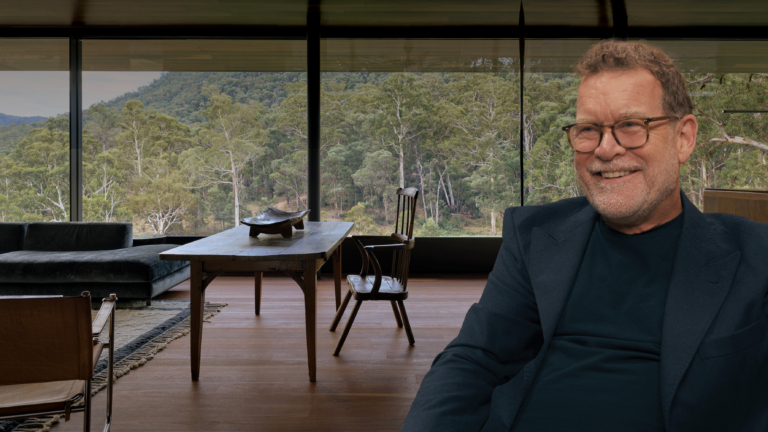
Home to artist spaces, community facilities, the First Nations-led Blak Dot Gallery and a maternal child health centre, the project was commissioned by the City of Merri-bek for the local Brunswick community. “There’s a whole lot of different communities that use this building and I guess a general approach is that this felt like a big house,” says Rachel Nolan, director of Kennedy Nolan.

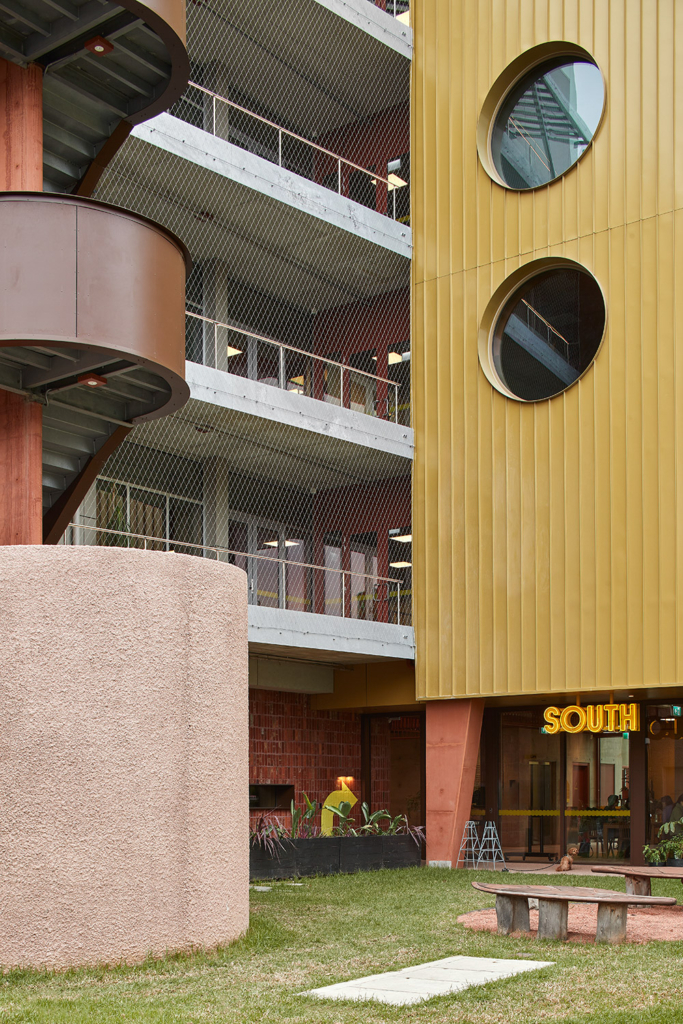
The name Balam Balam, meaning “white butterfly” in the Woi Wurrung language, was developed with Wurundjeri Elders.
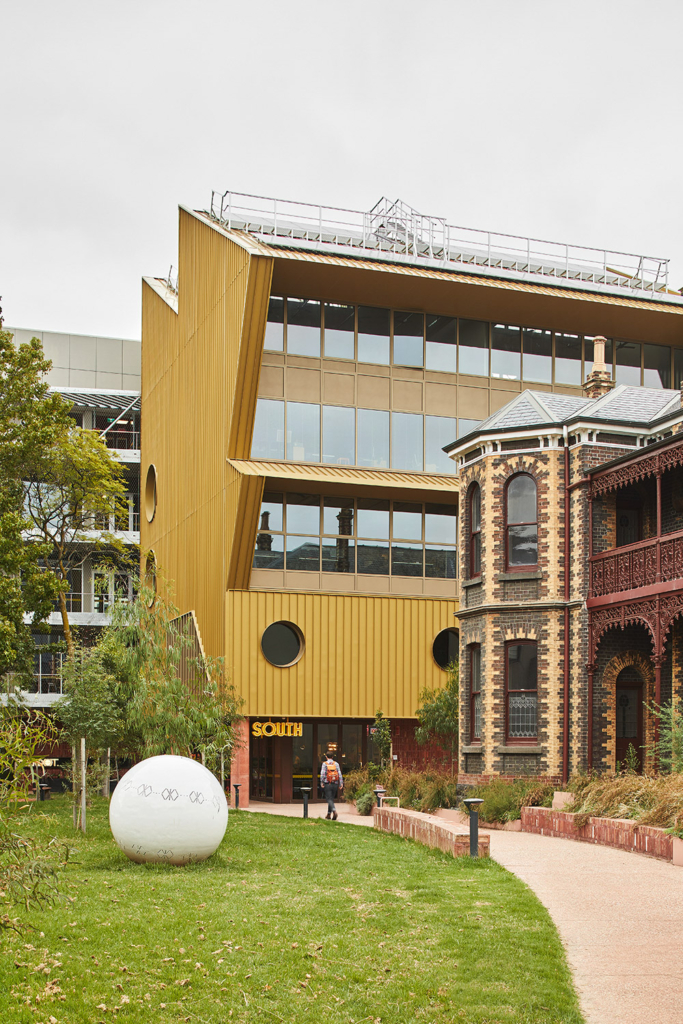
The name Balam Balam, meaning “white butterfly” in the Woi Wurrung language, was developed with Wurundjeri Elders early in the process. “The idea of the white butterfly implies that there’s transformation, which is exactly what happens here,” Nolan explains. “Things change and transform.” The site already carried layers of history – from an 1880s Italianate mansion to a 1950s school building that remained embedded in community memory. Rather than erase those complex, interwoven histories, the design team reframed them. “We arrived here and it was already kind of alive. We loved it because we could see how much soul was in this site.”
Community consultation revealed a strong desire to prioritise the cultural history of the school over the colonial legacy of the original mansion. In response, landscape designers Openwork surrounded the heritage house with indigenous planting. “The old building was reframed by being surrounded by a moat of indigenous planting,” she says. “In time, that planting comes up and the building almost sinks into it and the history of that building is changed.” Meanwhile, the preserved frame of the former school building remains on the northern edge of the site, acting as “a stage or a portal into the site”.


Architecturally, the buildings avoid the imposing language often associated with civic projects and appear warm and welcoming. “The design thinking is that the buildings should not be the hero of this site,” she explains. “They should almost be the collaborator or the assistant or they’re here to help.”
That sense of openness extends into the material palette. There is brickwork salvaged from buildings demolished on the site, while earthy red columns, ochre-hued walls, cork finishes and Durra Panel surfaces create interiors that feel deliberately domestic rather than institutional. “We use materials that sometimes can feel maybe a bit more residential than municipal so that you can feel like you’re in a home situation rather than in a municipal building.”
Light and shade also became central to the design. Inside, large internal Shade Factor blinds act “almost like eyelids”, protecting interiors from the morning burst of eastern sun while creating a graphic visual language across the spaces. On the east elevation, the team installed motorised German-engineered Warema external vertical awnings from Shade Factor, allowing Blak Dot Gallery the flexibility to either open itself to the street or become enclosed for exhibitions and events.
The result is a cultural campus that feels adaptable, generous and genuinely public. “This site needed to look like a kind of invitation or an opportunity to the community to come in and play,” Nolan says. “It feels like this site is alive with things that you might not expect.”