Vertical Courtyard House
A private retreat for architect David Montalba and his family, Vertical Courtyard House in Santa Monica Canyon, California, dissolves boundaries between inside and out.
Situated in the lush Santa Monica Canyon, Vertical Courtyard House is architect David Montalba’s own residence. “Opening the front door, this softness within the vertical courtyard is a really subtle transition to the private space beyond,” says Montalba. Designed as a private retreat for his young family of four, the house has a modest street presence, which leads to an interior that is both open and inward-facing, characterised by natural light, materiality and the framing of nature.
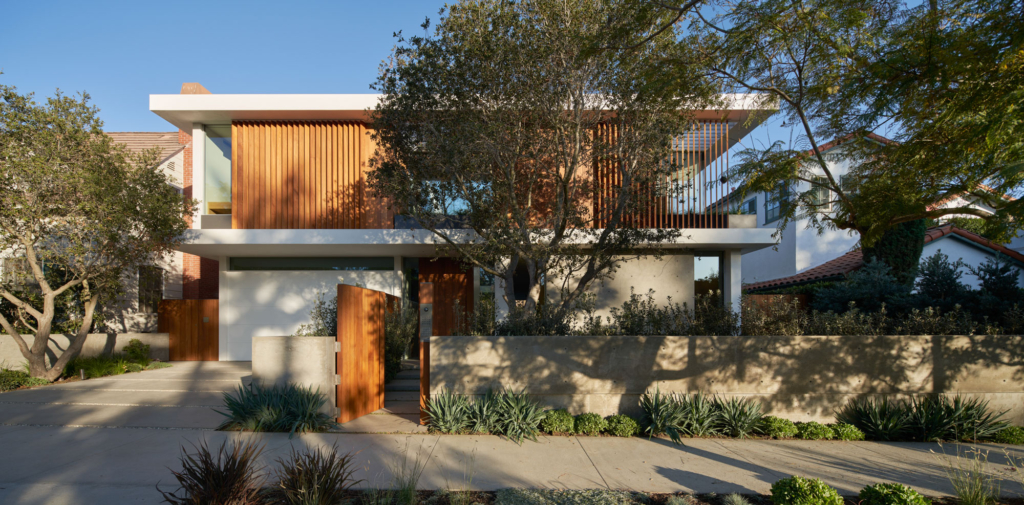
Organised around a vertical courtyard – a three-storey atrium that draws light into every floor – the home is built across three levels. A family room and guest suite sit on the lower floor; the ground level opens up into the main living, kitchen and dining zones; and the top floor is split into the parents’ wing and the children’s rooms, joined by a light-filled bridge. “Our program, frankly, was quite large,” says Montalba, “so we really thought about how to extend that vertically… Usually those two things don’t go together, but for us it was important to retain this sort of aspirational quality of nature and at the same time, build the functionality in the rooms.”
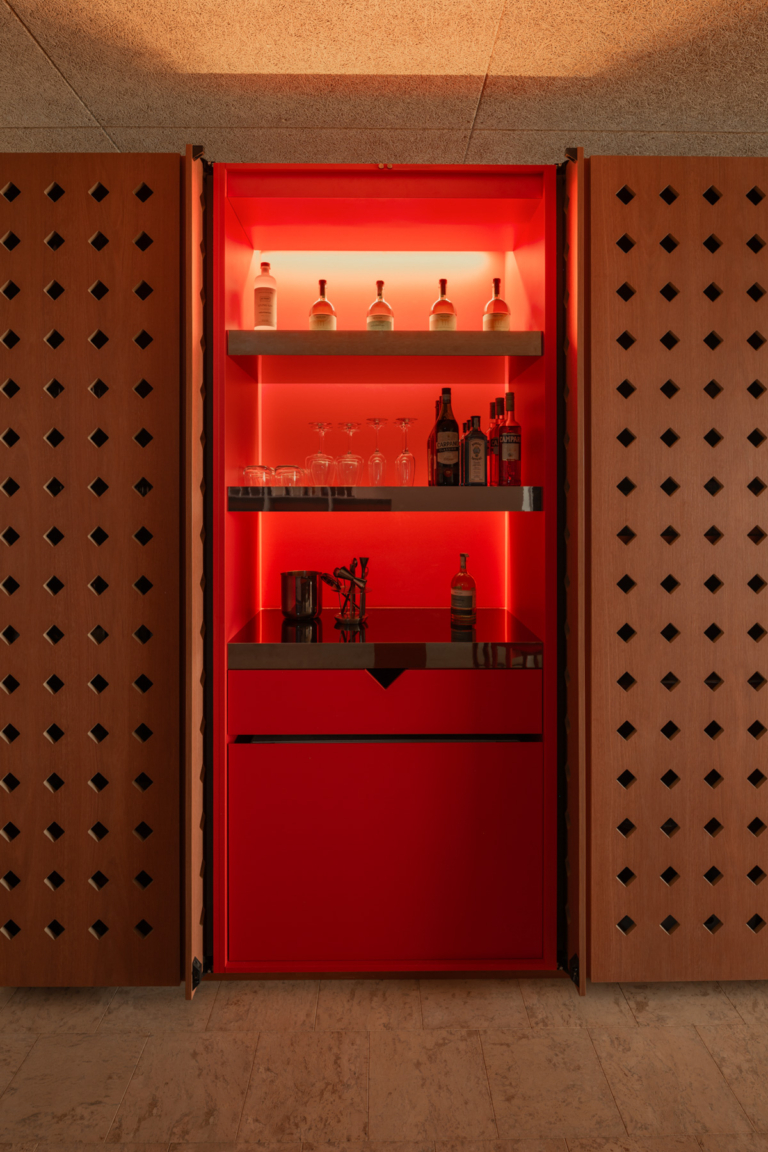
True to Montalba Architects’ practice – based in Californian modernism and influenced by Swiss design – the house is simple and honest in its material palette. “We often select materials based on the reflective quality,” he says. “For us, it’s about the textures and how the sunlight hits the walls.” The surfaces are muted, textured and considered, with the use of corrugated white oak, sandblasted concrete and teak louvres. At the centre of it all is glass, which was essential in dissolving the boundary between indoors and out.


The partnership with Vitrocsa was key to the success of the home. “This idea of a window frame that just really dissipates is a powerful tool,” says Montalba. “We needed the right product to allow the windows to pocket away and really be seamless – Vitrocsa certainly was able to do that.” The glazing disappears into the architecture, allowing the interiors to feel fully connected to the garden and beyond. The collaboration even extended to hardware. “One of the key elements in the Vitrocsa system was a custom locking lever that we designed together,” says Montalba. “That was a fun little side project.”
Across the footprint, greenery moves with the architecture – from the rear garden that folds into the living areas, to the vertical courtyard that links every level with light and views. “I’m probably most proud of the way we use natural light and the landscape to extend one’s experience of the home,” says Montalba. “It feels both connected and rooted in nature, but very intentional.”

In every way, Vertical Courtyard House expresses a lived-in approach to design. “As an architect, we not only design our homes,” Montalba says, “we design our practice and our lifestyles.” Here, those ideas are inseparable.
Architecture and interior design by Montalba Architects. Build by Sarlan Builders. Landscape design by Elysian Landscapes. Structural engineering by Gordon Polon. MEP engineering by PBS Engineers. Windows by Vitrocsa.