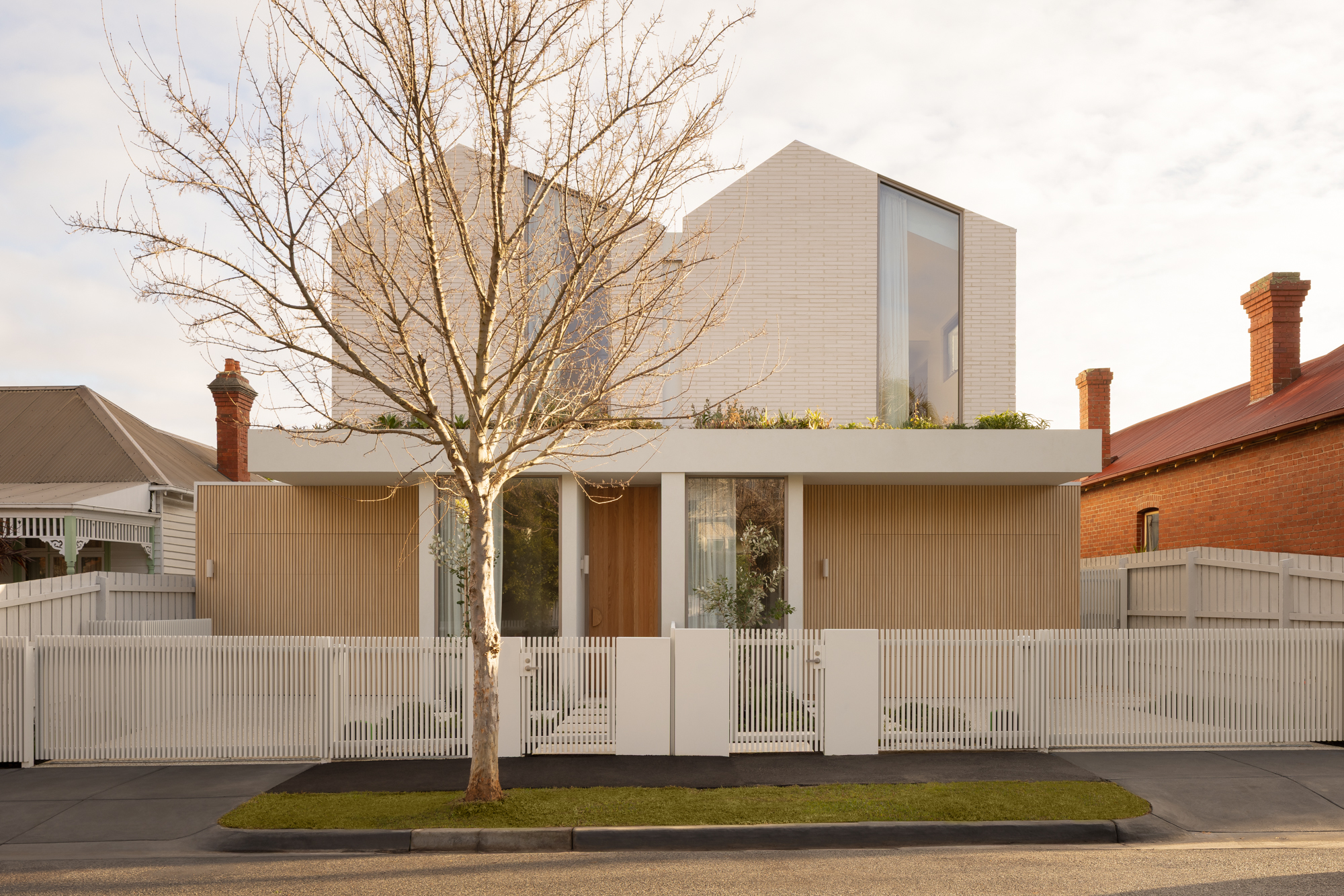
Gordon Avenue
Reworking a forlorn corner of Gordon Avenue in Melbourne’s Elwood, Habita has delivered a pair of highly considered homes, creating an environment that gently reframes daily life.
For Melbourne design studio Habita, discovering a rundown 1970s brown-brick property on Gordon Avenue in bayside Elwood marked the ideal starting point – not simply to build but to contribute meaningfully to the suburb’s quiet residential matrix. Free from heritage overlays but steeped in character, the location offered breathing room for design diplomacy, creating an architectural dialogue between past and present, old and new.



Sensitivity to both context and contemporary living is evident in the composition of the two new townhouses. Drawing cues from surrounding residences and existing typology, the project reinterprets the classic pitch of neighbouring roofs with a crisp, symmetrical silhouette, grounding the project among its brick and weatherboard counterparts. Further echoing its locale, Gordon Avenue reinterprets classic 1970s cream brick with a light-toned, handmade brick, softening and bedding its appearance into the streetscape and leaning gently into the bayside locale.
Adding further nuance to the facade, a drought-tolerant suspended garden introduces texture and seasonal dynamism. From the street, it reads like a living veil, softening the crisp lines of the architecture.
Dining and kitchen areas are oriented due north, floodlit all day, while corner stacker doors open to a plunge pool and private courtyard.


Internally, the homes establish a muted rhythm of space, light and material. In contrast to the angular exterior, planning is open and subtly curvilinear, prioritising ease of movement with a gentle sense of enclosure. Corners dissolve into softly curved walls at junctions, creating visual breathing room and steering away from overly rigid geometries.
Threading together three levels, the clean lines of the staircase further express the sense of vertical openness hinted at in the facade, while acting as a lightwell to draw borrowed daylight into the core of the homes. Natural light becomes both a material and a motif as living, dining and kitchen areas are oriented due north, floodlit all day, while corner stacker doors open to a plunge pool and private courtyard. Above, the rooftop sanctuary features trailing planting, inviting long evenings and coastal breezes, a space for relaxing and entertaining alike.
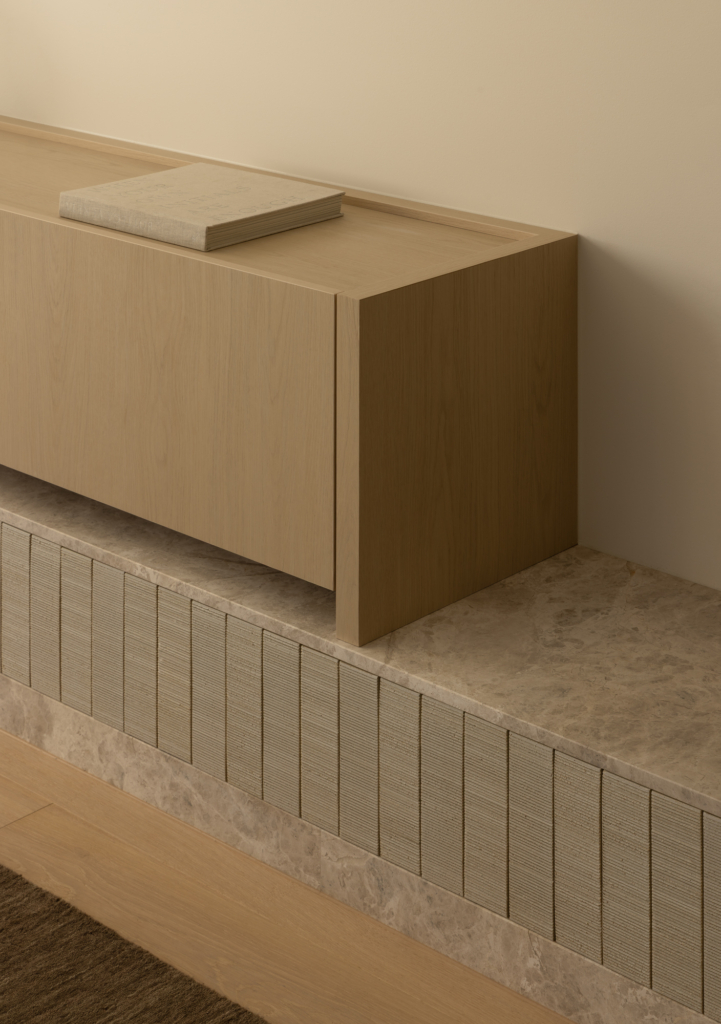
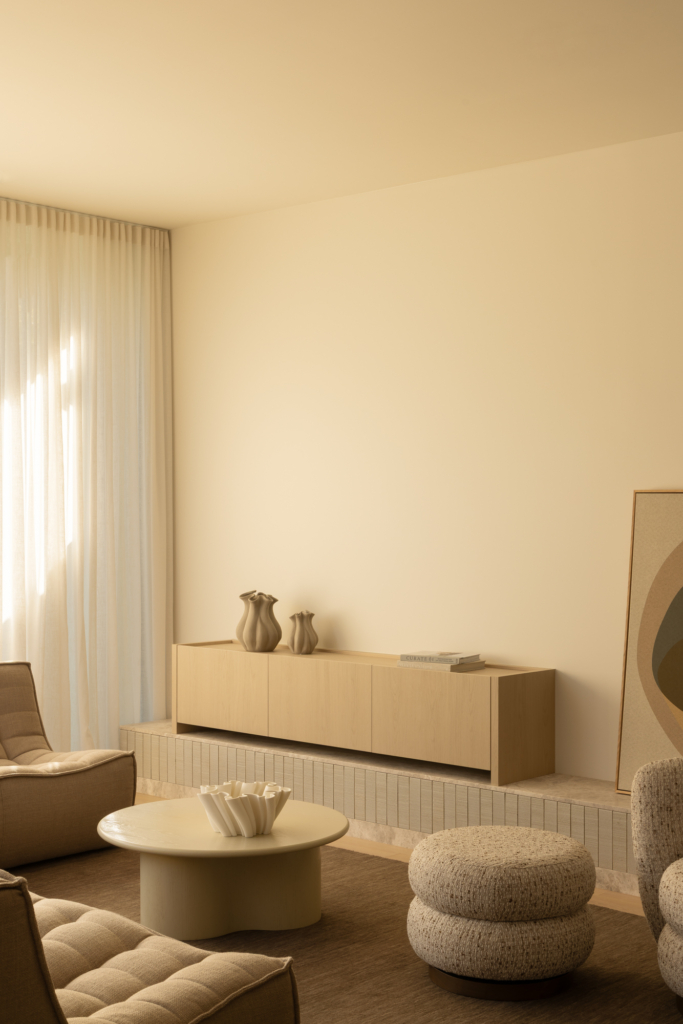
The interiors are underscored by a hushed palette of natural limestone, light-toned timber and wool carpet, imbuing the home with an enduring, tactile warmth. Japanese handmade tiles and delicately applied Venetian plaster lend refinement and an artisanal touch to the kitchen and ensuite. Restraint is evident throughout: walls are painted in a shade of white selected specifically for its subdued warm undertones, which highlight and amplify the nuance of each material and texture choice.
Habita has not only delivered a pair of highly considered homes; it has created an environment that gently reframes daily life. Bridging the familiarity of established neighbourhood fabric and the needs of contemporary residents, the homes at once draw from, and add to, the existing texture and richness of Elwood.
Building design and development by Habita. Interior design by Empire Interiors. Build by Elwood Building. Landscape design by Justin Hutchison Landscape Design. Suspended garden by The Greenwall Company. Appliances by ASKO Appliances.