The Pearl
For Adelaide building designer Urban Habitats, The Pearl began not with an addition but with careful subtraction. Rather than expanding the heritage villa, the design reworks what was already there, bringing its light, space and character back to the surface.
The client had lived in the villa for many years, but a poorly functioning 1970s extension had left the home feeling constrained, disconnected from the garden and difficult to navigate. Rather than demolish it, Urban Habitats focused on making the existing spaces work better by removing unnecessary divisions, improving the flow of the plan and creating a clearer hierarchy between shared living areas, private retreat spaces and the landscape. “She was looking for a shift in how the home lived day to day – something lighter, calmer and more uplifting,” says design manager and senior architect Sarah Stephen. The kitchen was moved to the centre of the shared living spaces, while the bedroom, ensuite and study nook were arranged as a quieter private wing.

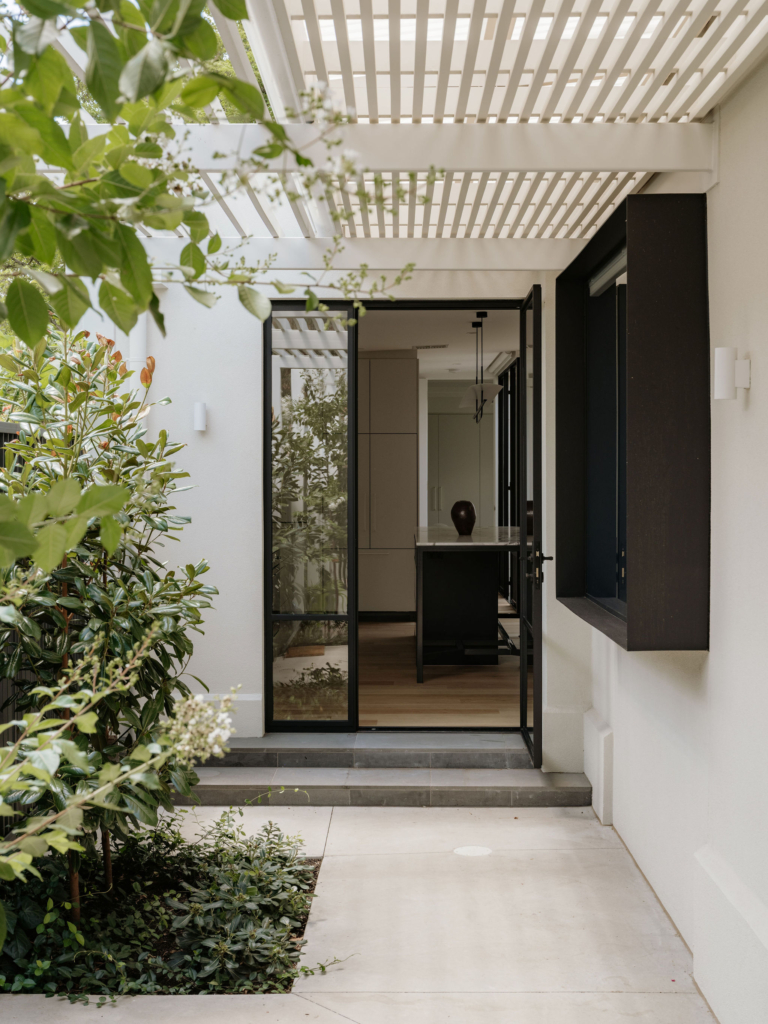
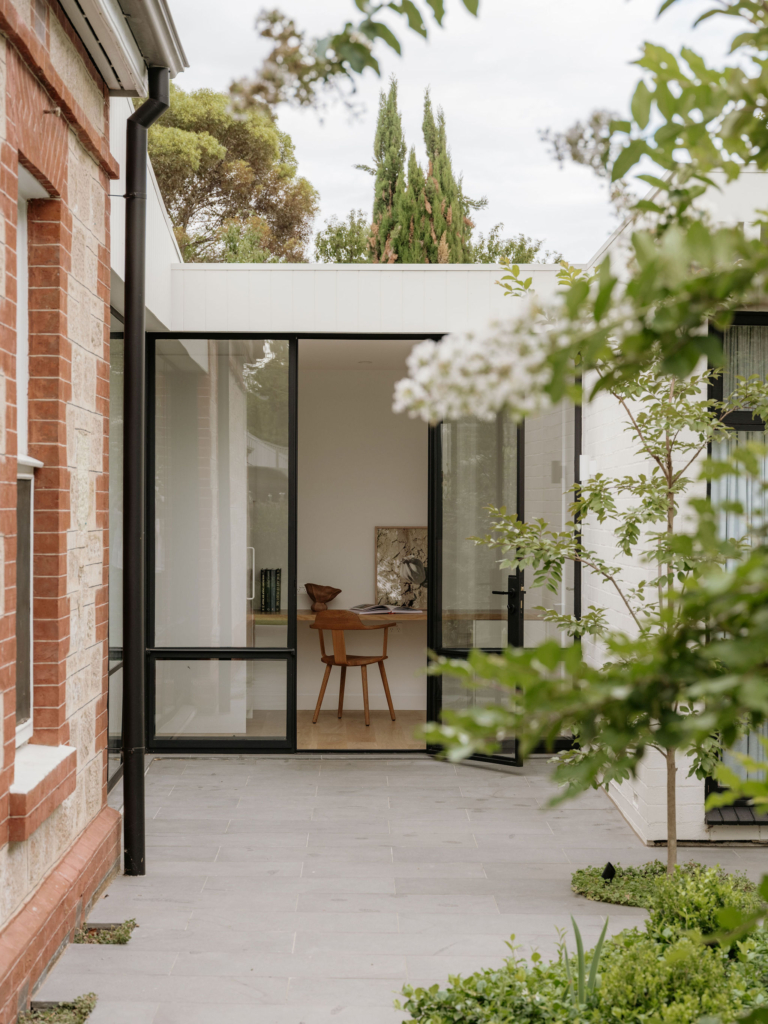


Steel-framed glazing became the key connection between the heritage villa and its mid-century addition. It frames views, brings light deep into the plan and allows the two parts of the home to feel distinct while still reading as one cohesive whole. Overhead, skylights work with the existing low ceilings, using them to create moments of intimacy. In the primary ensuite, one placed above the shower turns a simple daily ritual into something more atmospheric.
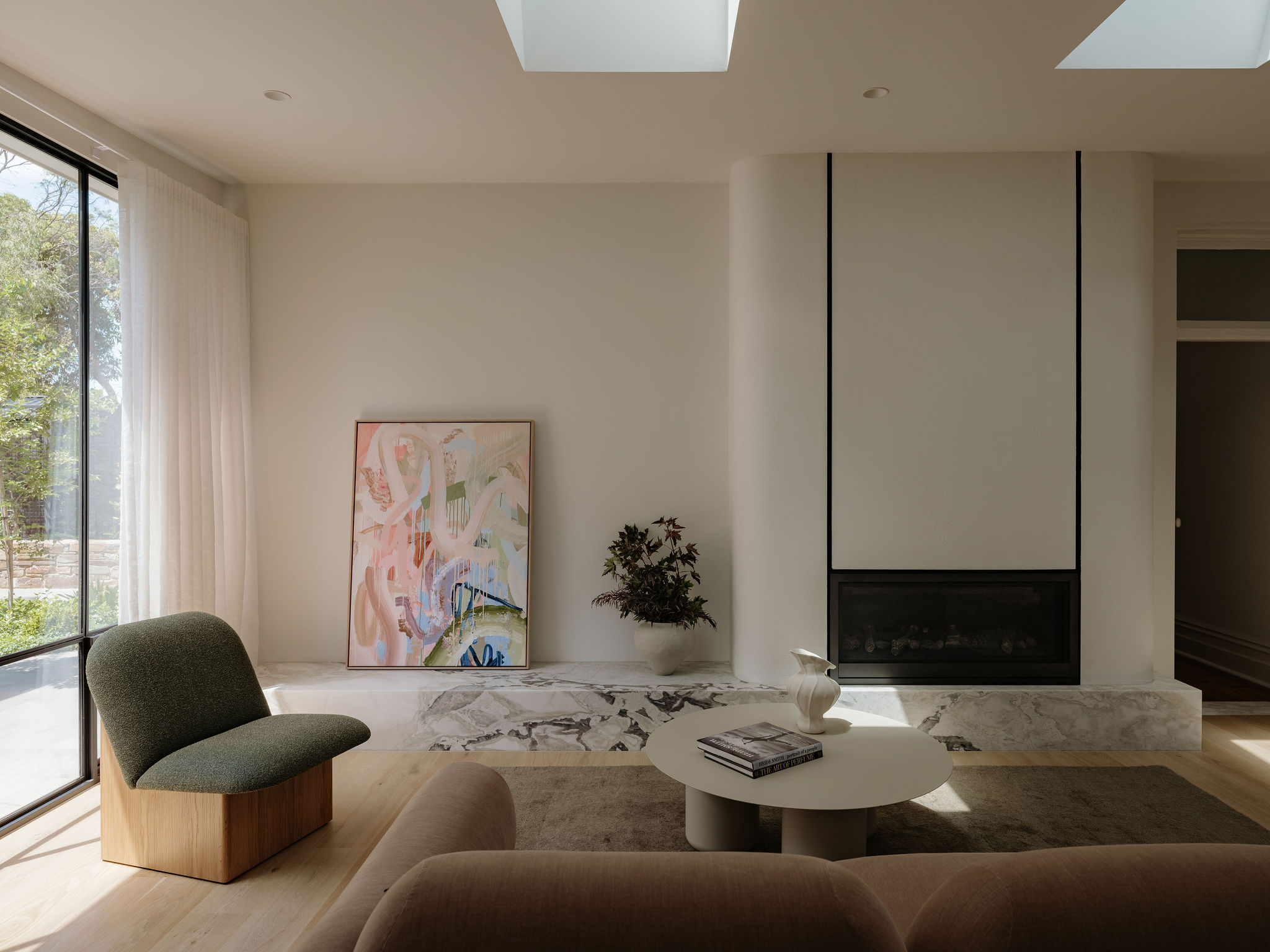
The material palette follows the same approach: restrained and detailed. Engineered oak flooring runs throughout the home, while Venetian plaster brings texture to the living areas. In the kitchen, honed Oyster marble benchtops are paired with muted joinery, with American oak veneer adding warmth. A sculptural fireplace anchors the living room, introducing a subtle moment of intrigue. Outside, bagged and painted brickwork, fine texture cladding and simple steel details create a consistent architectural language. Zincalume roofing, bluestone and lightly treated concrete extend the palette beyond the interior, helping the house feel connected from inside to out.
Natural light is the project’s defining element. Artificial lighting is correspondingly understated, with wash lighting and recessed details supporting the architecture rather than performing independently of it. The landscape follows the same logic: layered planting is designed to look established rather than overly composed, while continuous paving helps dissolve the boundary between indoors and outdoors. Retaining the existing footprint rather than demolishing was the project’s most significant sustainable act, with insulation upgrades and carefully positioned openings for light and ventilation building on that approach.
The client’s response to the dwelling is perhaps the clearest measure of its success. “It has become the sanctuary she was seeking – one that supports both everyday living and moments of pause,” Stephen reflects. The Pearl demonstrates the value of restraint, showing how thoughtful design can transform a home not by adding more but by revealing what was already there.