Joe Blow
Melbourne-based studio Joe Blow specialises in Italian post-Fascist furniture, renowned for challenging established conventions of living, making and material use.
In a market driven by rapid production cycles, lower-quality replicas and ever-shifting trends, Joe Blow proposes a slower way of engaging with design. With a furniture collection curated not simply as objects of utility but as records of both cultural and social history, the Melbourne-based studio believes design is more than an aesthetic pursuit – it is a story contained within an object.
The bulk of Joe Blow’s collection is centred on the remarkable wave of creativity that emerged in Italy after the fall of fascism. In the decades that followed the Italian post-war era, designers began challenging established conventions of living, making and material use. The result was a period of extraordinary experimentation, ranging from the playful irony of the Memphis Group to the technological optimism of Space Age design and the radical countercultural ideas that defined the late 1960s and ’70s.
Selected for their form as much as the ideas and cultural shifts they represent, pieces in the collection come from such influential European designers as Vico Magistretti, Afra and Tobia Scarpa, Marcel Breuer and Gerrit Rietveld, produced by renowned manufacturers like Cassina, Artemide, Kartell and Zanotta.
The Joe Blow story began in the storied Italian countryside. Travelling between barns, hangars and basements filled with objects gathered over generations, the founders met collectors who shared pieces along with their personal histories – a chair inherited from a grandparent, for example, a dining table that had served family gatherings over decades, a lamp given as a wedding gift. Each carried its own narrative alongside a wider design lineage. Through these encounters, post-fascist Italian design revealed itself as a story of renewal, creative freedom and cultural resilience.
Several works within the collection illustrate this spirit. The 1969 Soriana armchair, by Afra and Tobia Scarpa for Cassina, is named after the word for tabby cat in the couple’s Montebelluna dialect. A revolutionary design, it reimagines the structure of upholstered seating via polyurethane foam gathered by chrome clamps, allowing the fabric to form relaxed folds without internal supports. Carlo Bartoli’s 4875 chair for Kartell featured the world’s first single polypropylene seat piece to be injection moulded.
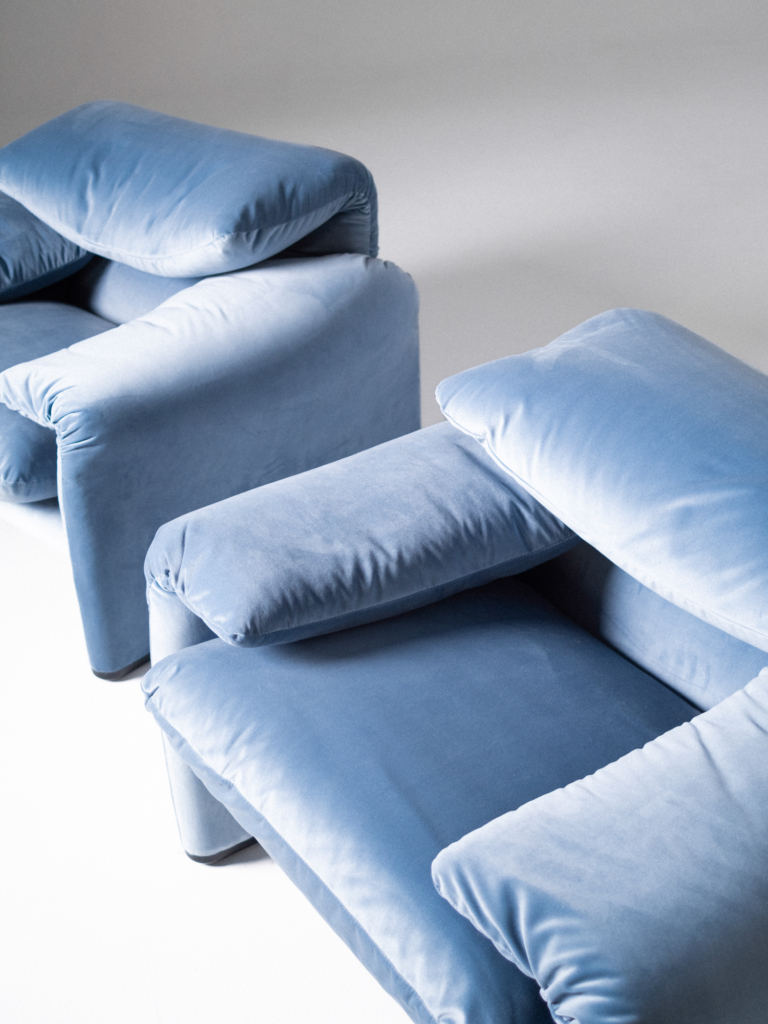
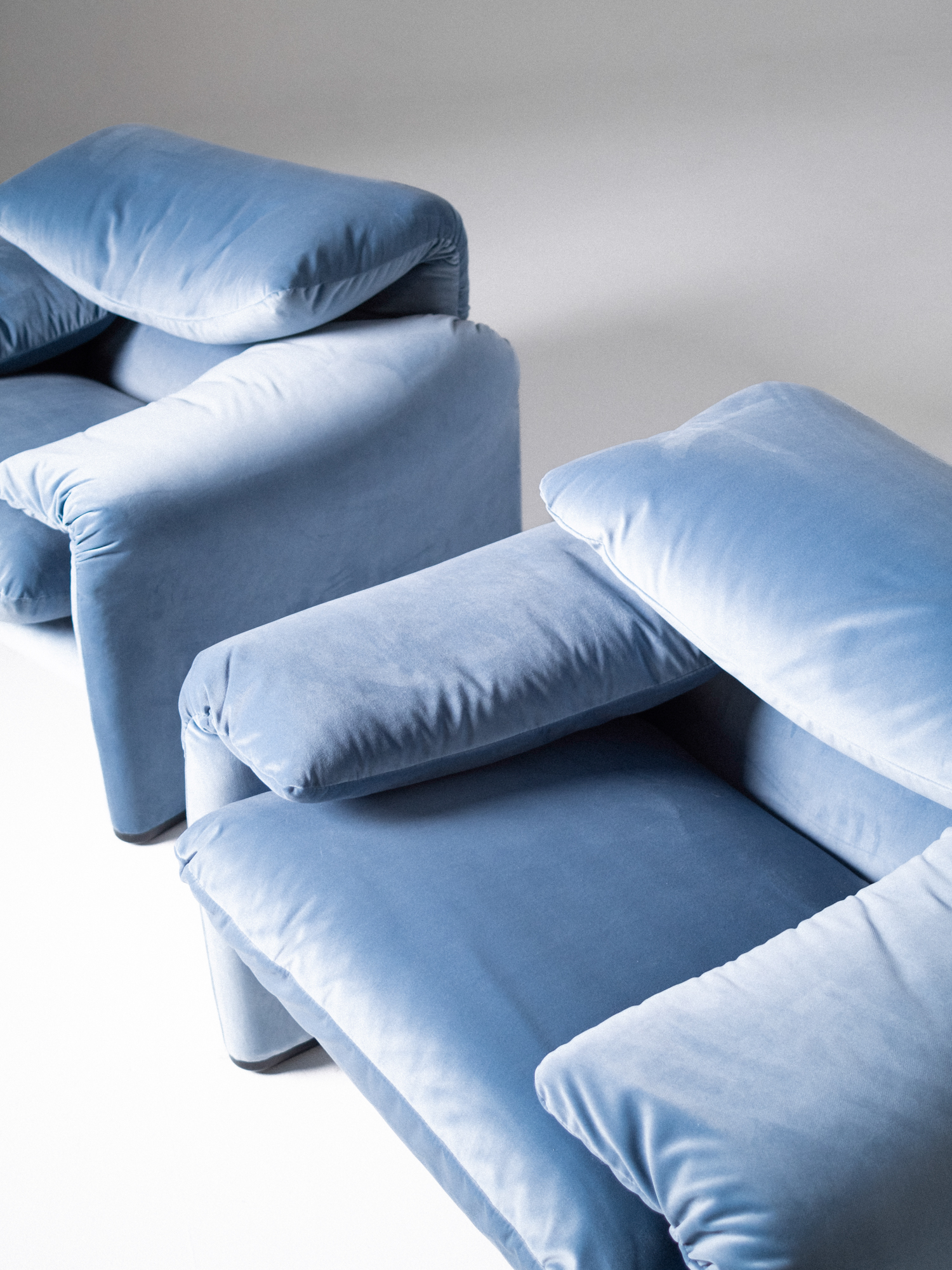
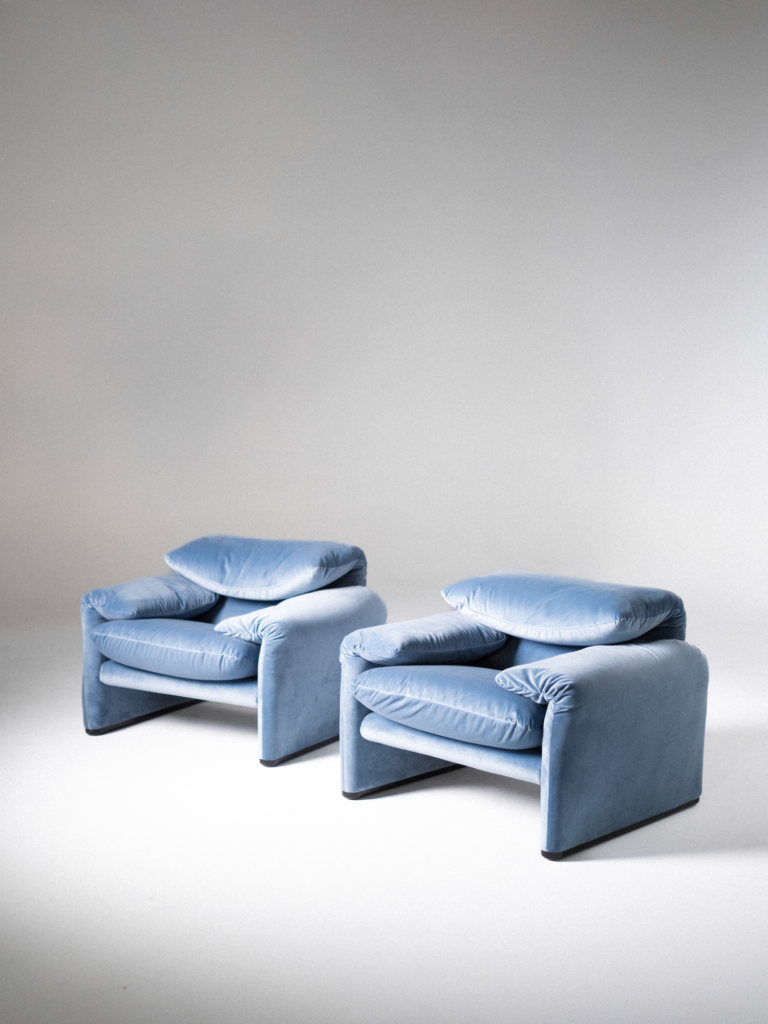
Equally influential is Magistretti’s award-winning Maralunga armchair for Cassina from 1973, which has a unique adjustable headrest – unfolded via a hidden chain mechanism – and, now, new luminescent crushed-velvet upholstery. His 1968 Selene chair for Artemide is produced from a single sheet of thermo-moulded resin. Demonstrating the potential of emerging industrial materials, it is widely considered one of the most innovative moments in Italian design.
Through works such as these, Joe Blow encourages a deeper reading of design – one that values innovation, experimentation and the enduring cultural stories embedded within objects.