Larchmont Residence
Set against the serene seaside backdrop of Westchester, Larchmont Residence is a Tudor Revival-style home with an almost fairytale quality, immaculately preserved and modernised by General Assembly.
Originally designed in the 1920s by famed American architect John Russell Pope, whose private clients included the Vanderbilts, Larchmont Residence carries an unmistakable sense of grandeur. It draws you into every asymmetrical corner of the seven-bedroom, five-bathroom family home, now guided into its next chapter by General Assembly through a seamless blend of past and present.

Patterned brick and stonework, stained glass windows and intricate millwork – all characteristics of the Tudor Revival style – inspired interiors rich in pattern and texture.


Patterned brick and stonework, stained glass windows and intricate millwork – all characteristics of the Tudor Revival style – inspired interiors rich in pattern and texture yet grounded in the comfort and warmth that were also hallmarks of the period. General Assembly, working closely with the client, chose not to wash this character away but to lean in.
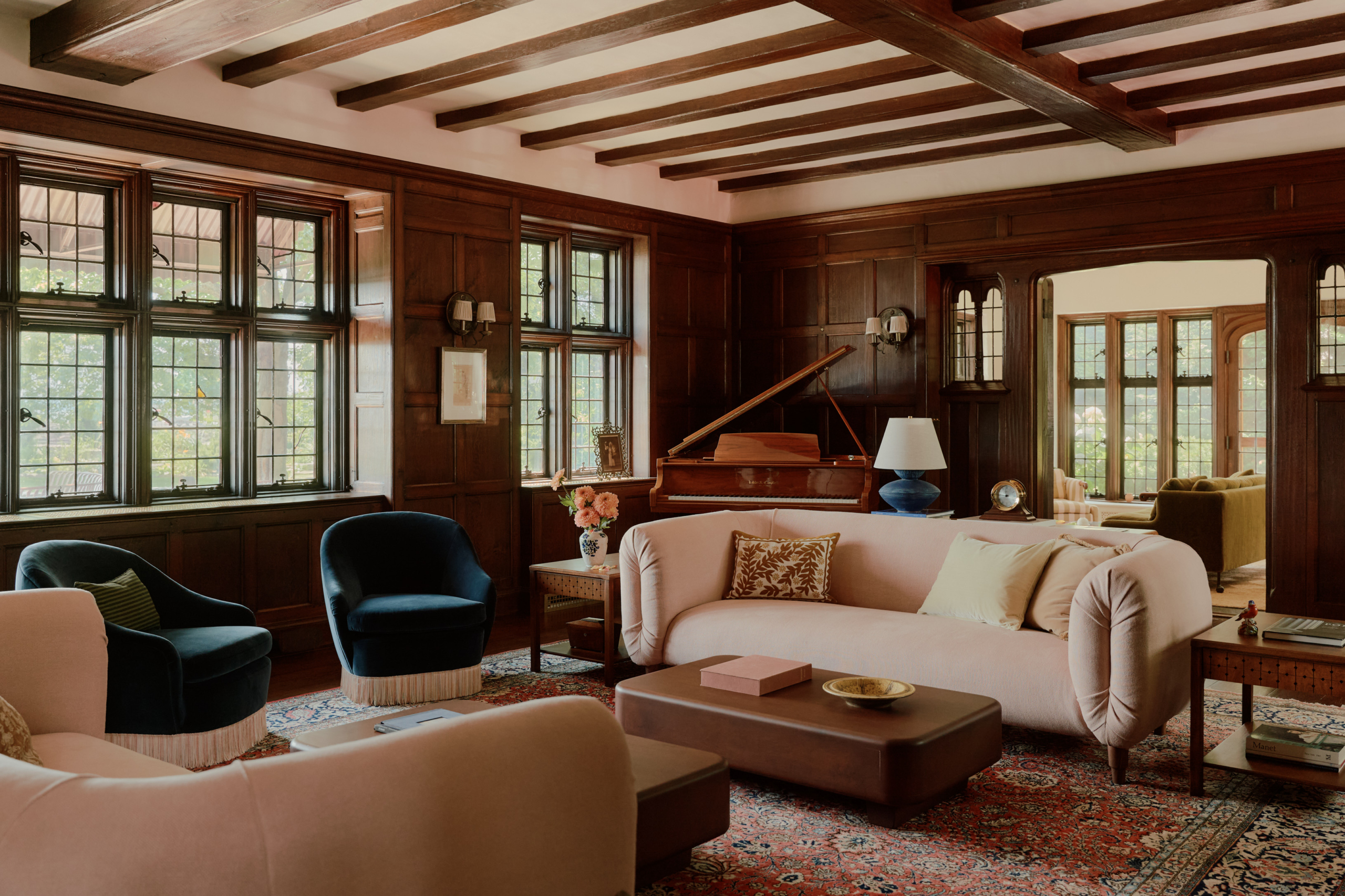
The ground-floor living spaces reflect the owners’ love of entertaining and hosting. In the living room, a grand, sunken arrangement and exposed-beam ceiling create a feeling of warmth and intimacy. The original dark oak panelling remains, as does the intricate built-in shelving, but these ornate details are now balanced by contemporary furnishings. Two generous Garagh sofas in a rosy hue anchor the space, while vintage Art Deco side chairs with fringing amplify its moodiness. Twin coffee tables from Nickey Kehoe introduce a more sculptural softness, their curves echoing the seating around them. The intimate nature of the room is balanced by airy views through French doors that open onto a terrace framing Larchmont Harbour. At the far end, an enclosed sunroom offers relaxed seating and a custom-designed oak bar.
“The home was designed through a contemporary lens yet still feels very true to its original spirit.”
The home’s generous formal dining room is enveloped in rich, honeyed tones that draw from the surrounding landscape. At its centre is a classic walnut dining table, extending to seat up to 16 guests, framed by a burnt umber rug below and a handblown glass chandelier above, its form suggestive of wilting flora. In the adjacent room, the butler’s pantry remains in its original state, serving as a stylistic jumping-off point for the new kitchen. A glossy, sandy wall tile stretches through both spaces, uplifted by graphic flooring and bright display cabinetry. Together with a grid of ceiling lights, a mammoth butcher block island and a vintage teak table, the result is a balanced study in functionality and charm.
Sarah Zames of General Assembly – one half of the duo at the project’s helm – describes the restoration as an exercise in respect. “The home was designed through a contemporary lens yet still feels very true to its original spirit,” she says. Nowhere is that dialogue between old and new more evident than in the upstairs bedrooms, each rich with personality.
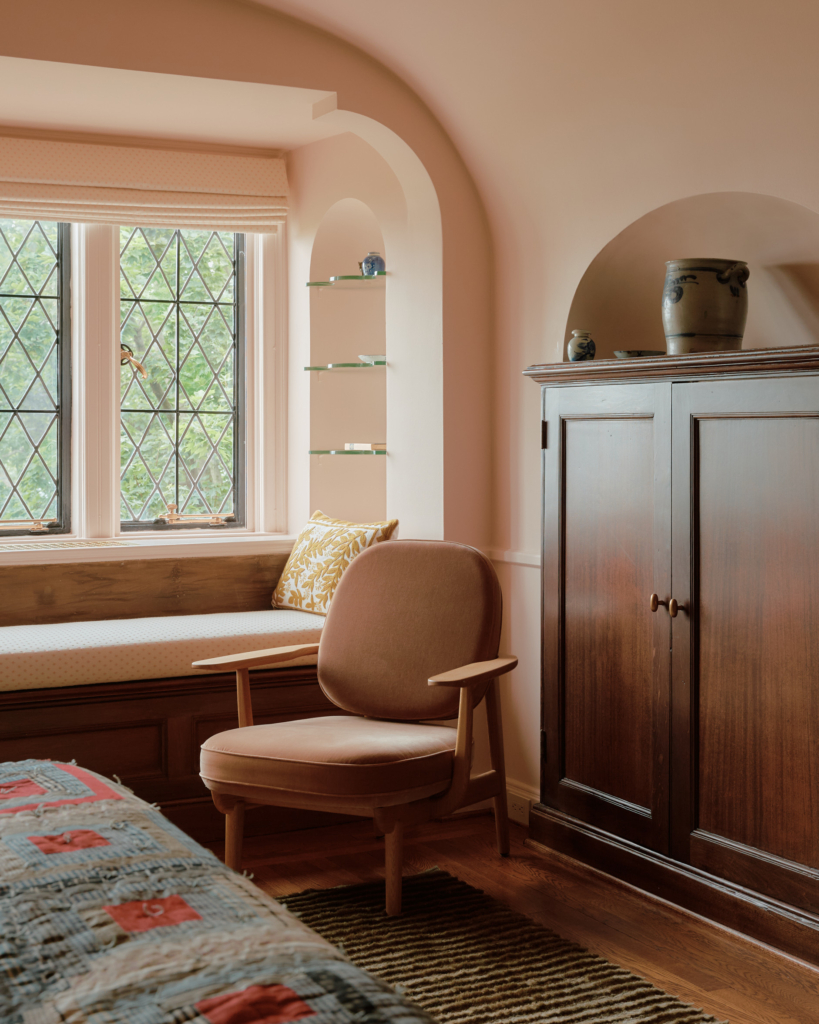

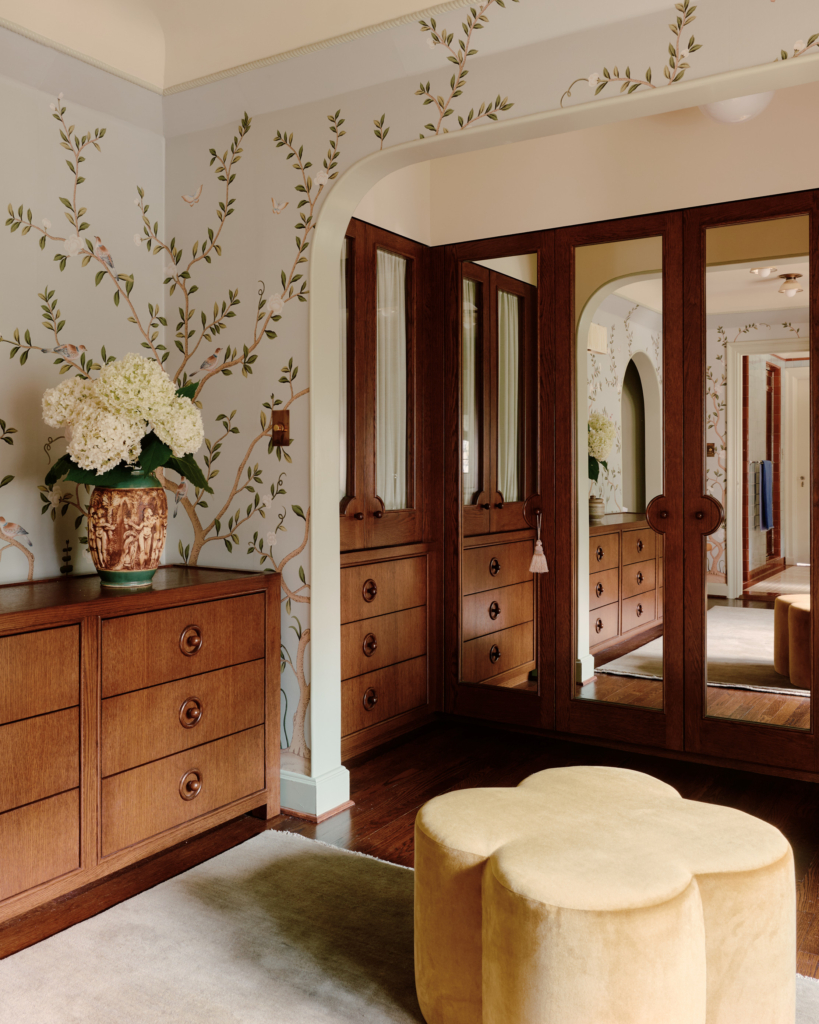
In the primary suite, a colour palette drawn from the water views wraps the walls in soft sage limewash. Two statement armchairs, upholstered in hydrangea lace fabric, heighten the room’s decorative spirit. This appetite for bold, brilliant design carries into the kids’ and guest bedrooms, where each space becomes its own vibrant retreat, layered with wallpaper, tilework and upholstery that clash in the most sophisticated way.
Rather than quieting the home’s many gestures, General Assembly has allowed them to lead. The result is a place that feels neither frozen in time nor overly polished into the present – but positively suspended between the two.