Little House on the Ferry
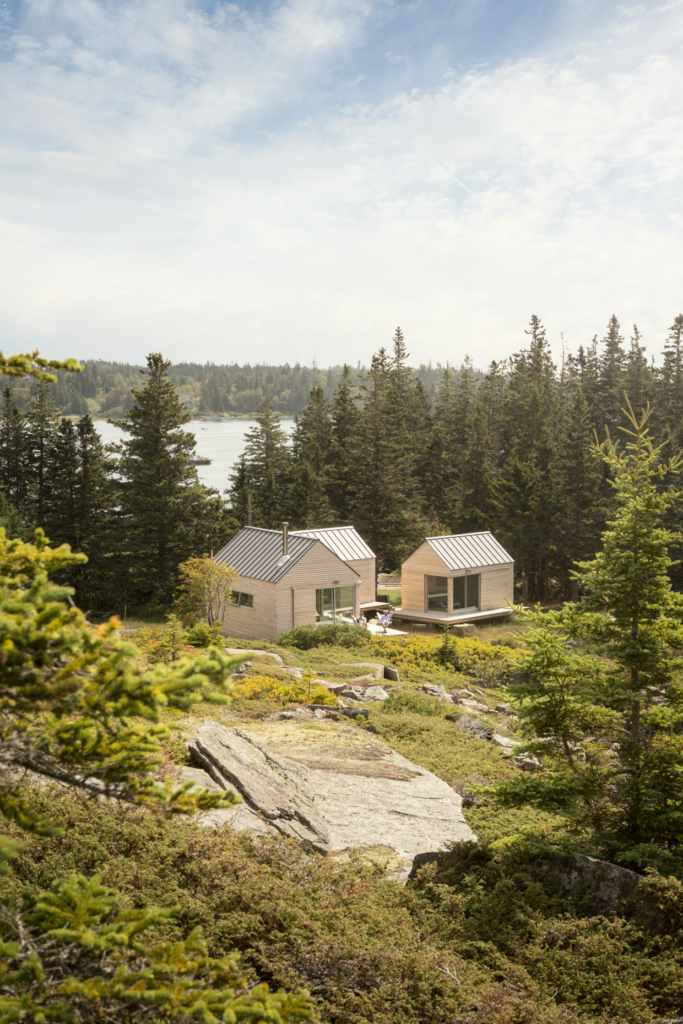
Perched atop a former granite quarry on the island of Vinalhaven, Little House on the Ferry is a seasonal guesthouse designed to exist in tune with Maine’s coastal topography.
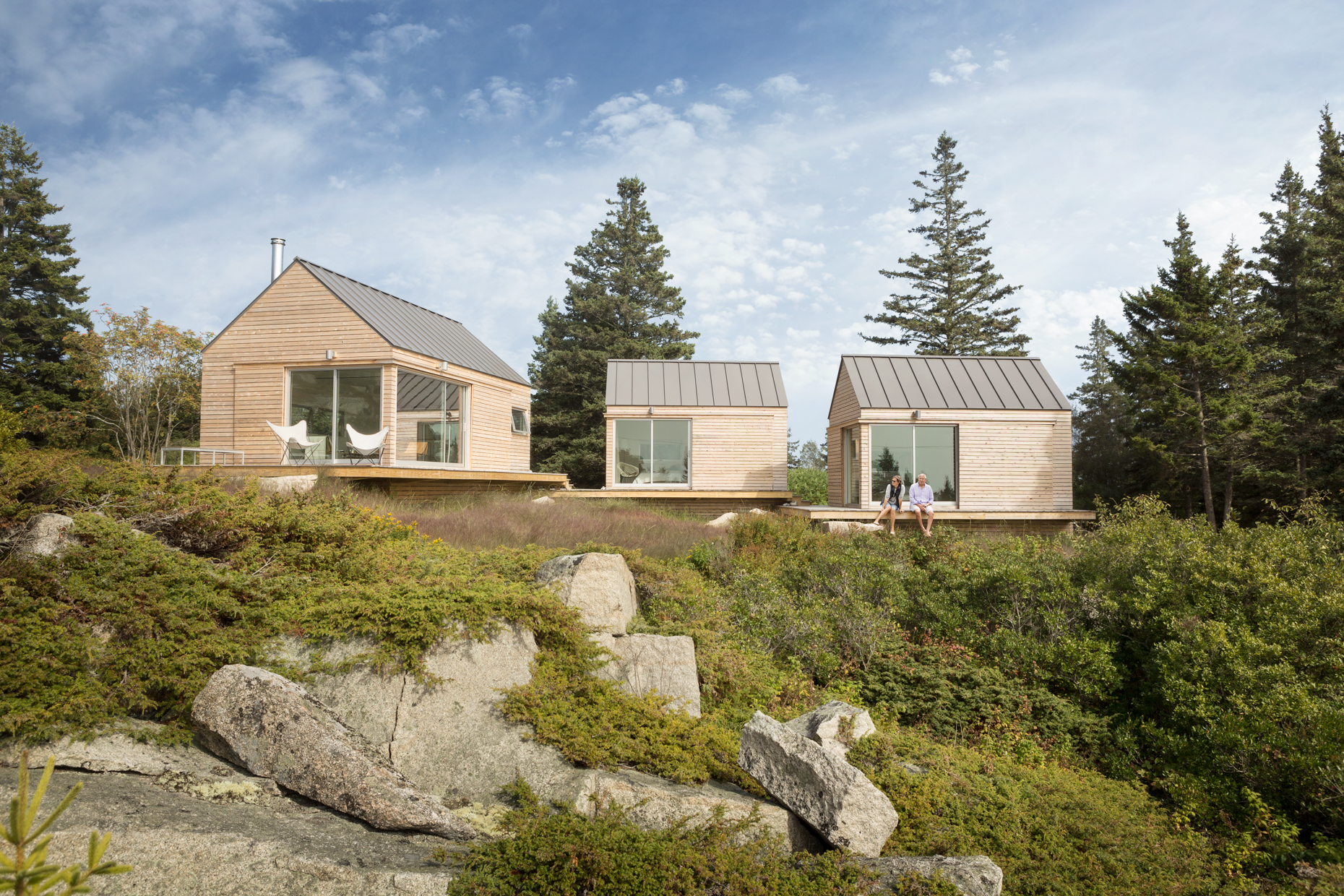
Dividing the 82-square-metre retreat into three mindful micro-cabins, OPAL created a timeless summer home that echoes the rugged seaside terrain, using wood that will weather and age to match. Built on land rich in minerals and views, the Vienna-based owners – who return each summer to their adjacent property – sought a place where their guests could feel immersed in the island’s exposed geology and the utilitarian rhythm of the waterfront. Drawing from the island’s fishing houses and the archetype of Maine’s roadside motels, OPAL devised what design partner Riley Pratt calls a “modernist reinterpretation of the traditional log cabin”, comprising three structures: one for living and dining, and two for sleeping and bathing.



Connected by a weaving, cantilevered deck, each volume appears to float gently above the land – a native yet contrasting softness to the raw, sculpted terrain. This design creates a sense of wandering, even among the dwellings, allowing guests to savour the “certain romance of stepping out into a warm summer evening, to walk from a shared gathering space to your private sleeping cabin”. From the large ‘whaleback’ parking area – an exposed ledge – the stairs softly thread between the sleeping cabins to a central courtyard, where the view opens dramatically to the ocean.
In alignment with the quarry’s geometry, the main living volume sits at the site’s highest point, anchoring the arrangement. Containing the kitchen, dining and living areas, it culminates in an open deck where guests can lounge and take in the striking view. Interiors remain calmly unadorned and are pared back to focus the experience outward: painted white, with restrained furnishings, each cabin is framed by an open corner, keeping the landscape in constant view.



Given the site’s remoteness and ecological fragility, the building’s solution also became its showcase: cross-laminated timber. Made from native spruce – the dominant local tree – the prefabricated panels were trucked from nearby Quebec, ferried to the island and assembled to form the entire enclosures: floors, walls and roofs. Clad in horizontally laid eastern white cedar, the volumes incorporate a subtle gap detail that references local clapboard siding and the lath of traditional lobster traps found along the quarry’s edge.
The project also includes a quiet wink to Little House on the Prairie – a layered reference to its modest scale and the material journey across the bay to the remote site. As Pratt says, “there’s something inherently compelling about inhabiting a small, intimate space immersed in the landscape.” Built on a land shaped by time, Little House on the Ferry offers a rare moment to fulfil a certain summer urge: to be fully immersed in coastal nature, from the quiet of a cabin that’s light on the land, rich in atmosphere and well-attuned to place.