Kooyongkoot Residence
Behind the brick facade of a stately Victorian in Melbourne, contemporary insertions uphold the memory of the former abode – an assemblage of mindful encounters that strengthen the bond between person and place.
Amid the historic oaks of Melbourne’s eastern suburbs, a Victorian terrace has been eloquently reworked in honour of its glory days. Passers-by could be forgiven for overlooking the imaginative architecture that sits discreetly behind the stately frontage, reserved only for the near and dear who are graciously welcomed into this sanctum. Eras fall by the wayside in favour of vibrant reinvention, where the echo of the past presents a fitting backdrop to its contemporary counterpart.

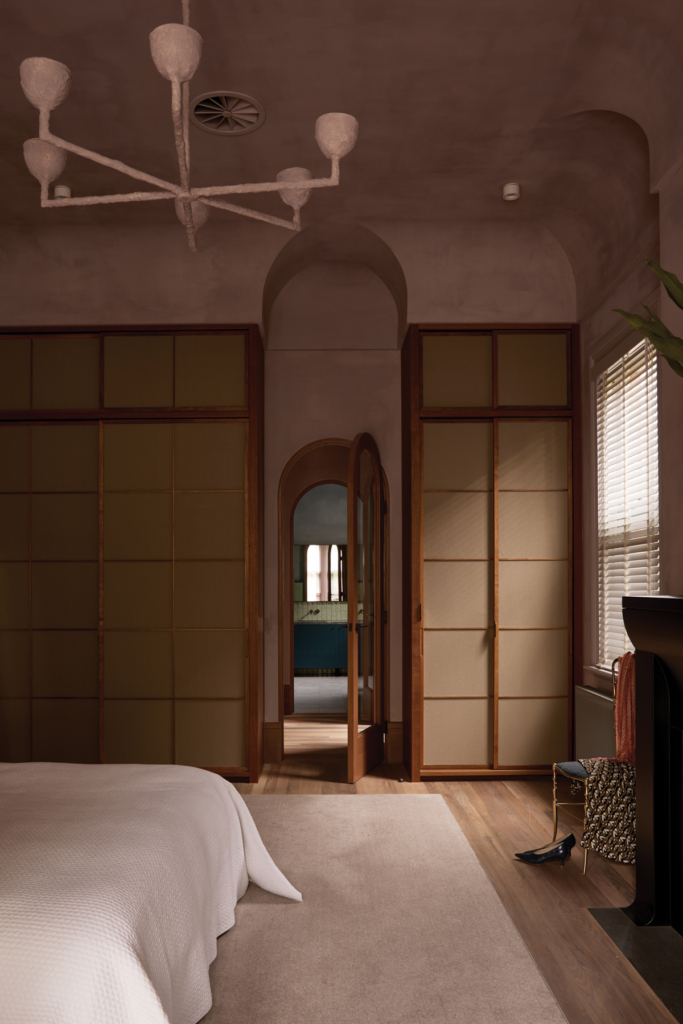
“The clients wanted a house that combined the luxury and practicality of a new construction with the charm and detail of a period dwelling.”

Conceived by architects Andrew Piva and Phoenix Wang of B.E Architecture, Kooyongkoot Residence is a tailored response for a social family of five and their beloved four-legged friend. In the spirit of evolution, the project pays homage to the original while boldly embracing the trappings of a modern world.
“The clients wanted a house that combined the luxury and practicality of a new construction with the charm and detail of a period dwelling,” explains Piva. “They sought a comfortable home where the kids could grow up – a place that supported study, activities and entertaining.”


Cavernous volumes instil an enveloping sense of calm that visually connects one room to the next while drawing a clear distinction between privacy and gathering. Navigating a topographical fall of nearly three metres from front to rear, the project finds a clear hierarchy that reacquaints the architecture with its natural surroundings. “The 140-year-old house was a mixture of many years of misguided renovations and extensions that paid little attention to the site or internal arrangement,” says Wang. Undoing the sins of bygone decades, the original structure was stripped back to its double-brick shell in a definitive move to re-establish its essence. Avoiding mere pastiche, period details are playfully reimagined to stand in harmony with the new. “The emphasis of the design was to highlight the differences of the original and new elements of the house, prompting unique ideas to be explored with total freedom.”
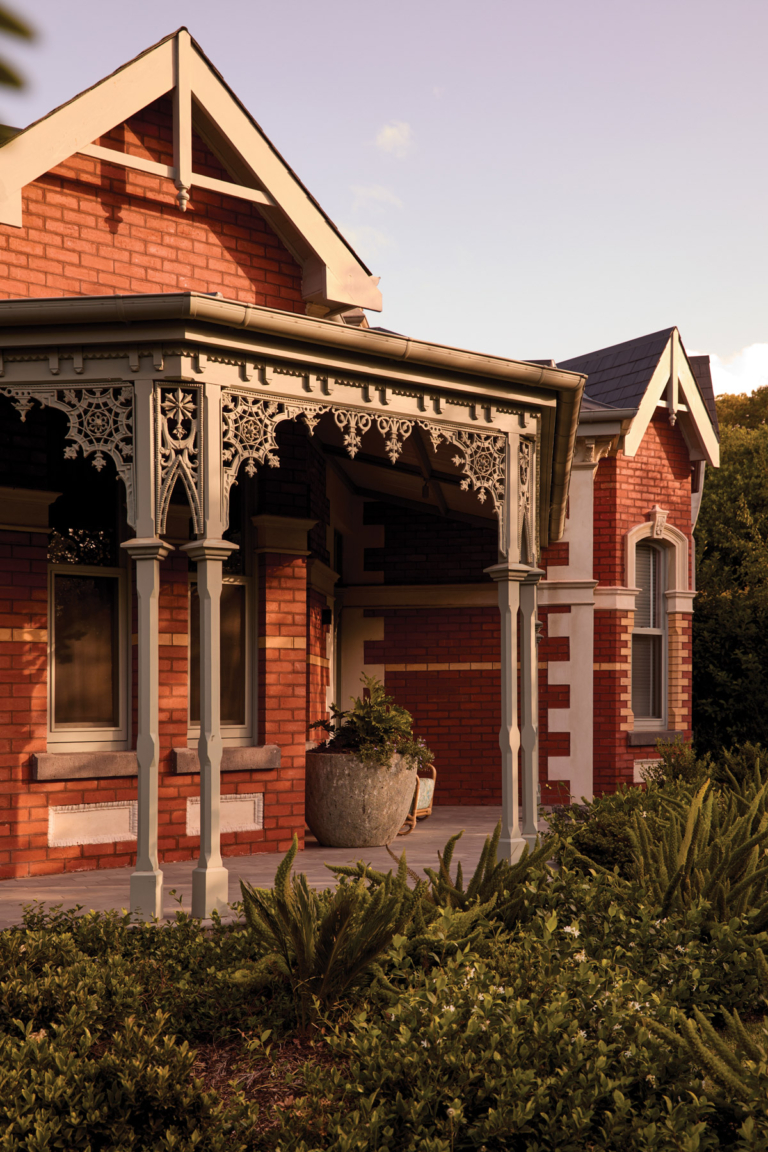
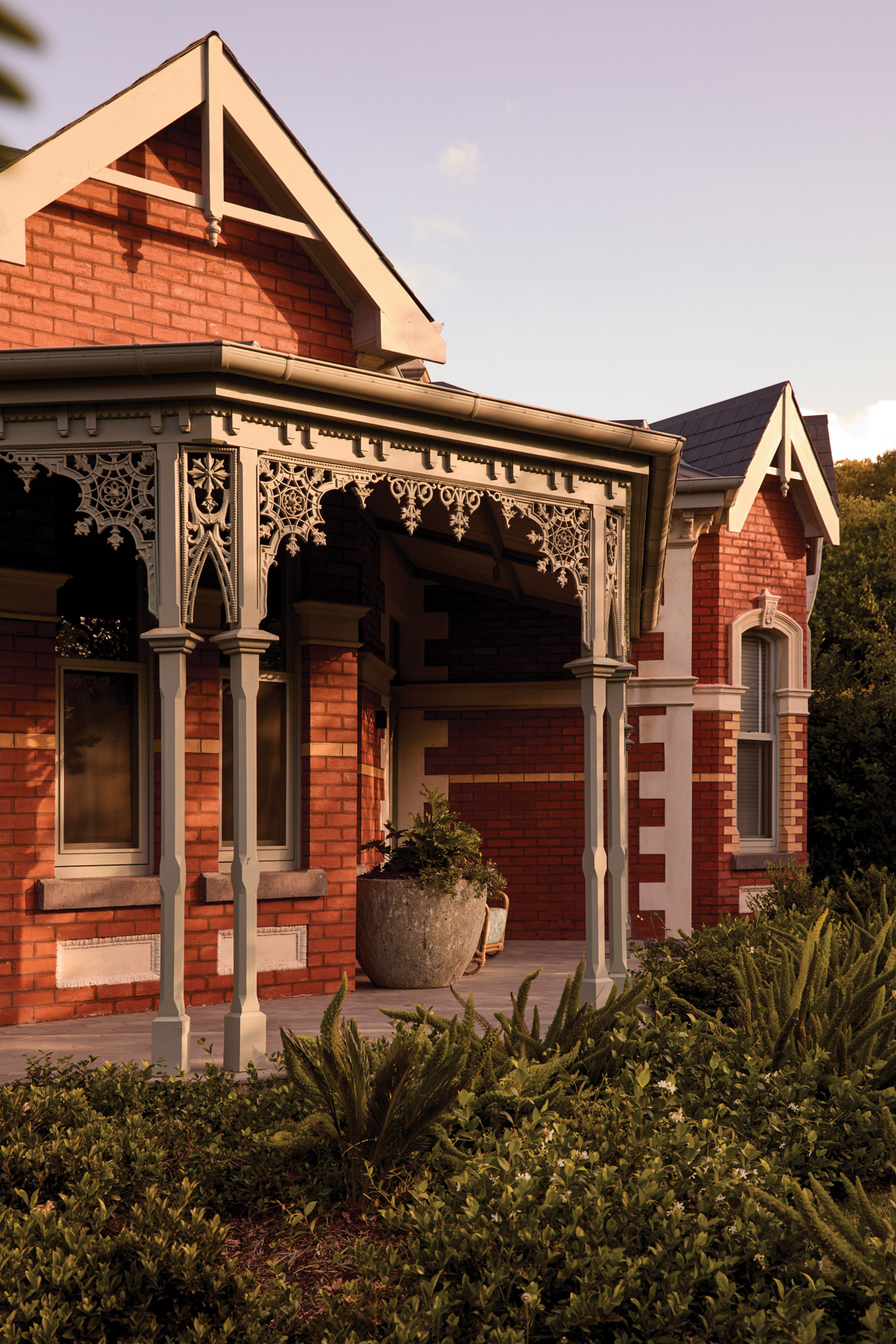
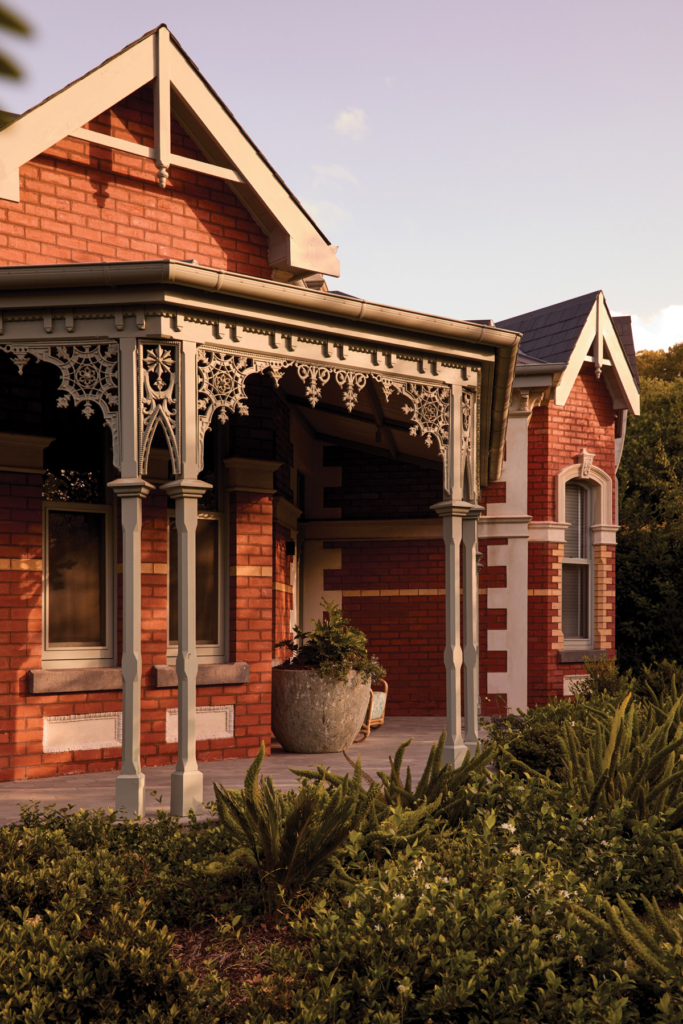
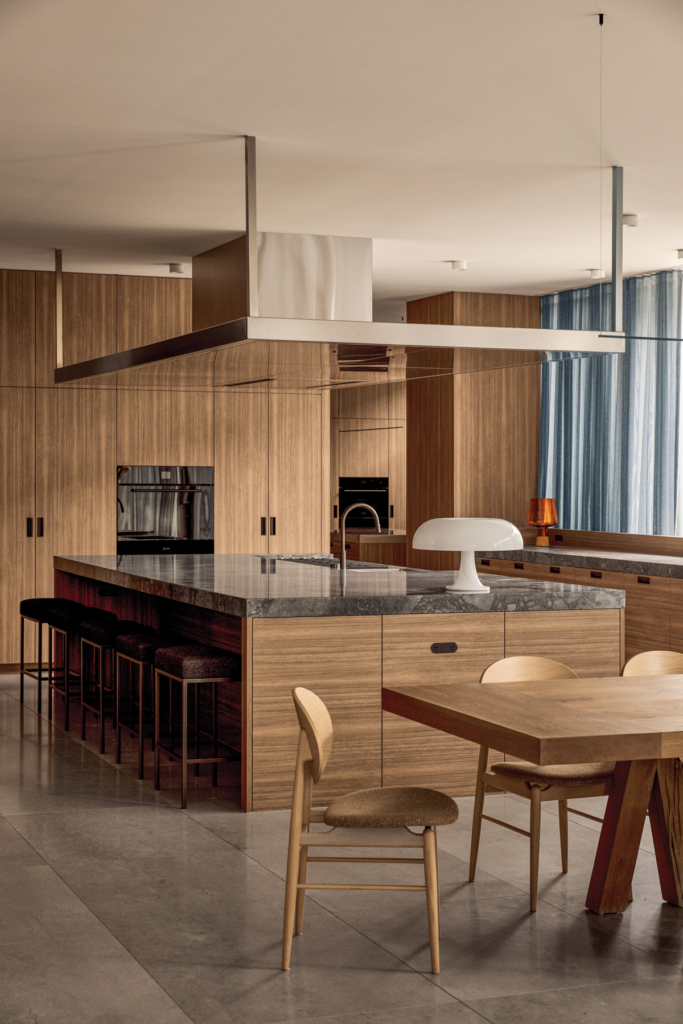
A gently winding path signals an arrival sequence that begins at the facade. The exterior is imbued with the enduring charm of the 1880s through a wraparound porch of intricate ironwork, terracotta brick and carved embellishments. A relaxed display of formality permeates the lounge, study and primary suite as counterparts to a generous central spine that leads into the living domain and upstairs bedroom wing. Stepping down into the rear addition, curvilinear vaulted ceilings shift into reductive planes, replacing deep earthen hues with crisp whites, mid-toned veneers and lustrous tiled floors.
“Apart from being evenly weighted, the two sections of the home are distinctly different,” notes Piva. “One could describe the difference as dark and light – moody and rich versus pared back and soft.”
A spacious kitchen marks the epicentre of Kooyongkoot Residence as a true expression of the tight-knit family who reside here. Designed as a hub for entertaining, it affords several spaces to converge and linger, all closely tethered to this beating heart.
“The area allows children to sit around the bench and do homework as meals are being prepared, or where friends are invariably drawn at dinner parties, making for a greater sense of communion,” says Wang. “The house is designed for how people interact with each other – intuitively experienced by way of spatial association.” Zones serve several purposes as called for by the routines of family life. Covertly accessed via a generous walk-through pantry, the entry point to the formal dining room echoes an old-world saloon, leading to a place to study, read or unwind at the end of a busy day.
Limewashed interiors adorn the original abode through the unified treatment of walls and ceilings. “Five colour variants denote the different functions of each room,” says Piva. “This is a defining feature in the front of the house, crafting a timeless appearance in keeping with the old.” A backdrop to a distinguished colour story, glossy sage-green wall tiles, eclectic cabinetry and striated polished stone culminate in moments of delight, with one-of-a-kind plaster light fixtures marking poignant nodes throughout.
Skirting boards, fireplace mantels, trims and cornices are suggestive of the past yet unmistakably modern in their presentation. A perpetual dialogue exists between ebullience and monastic restraint, where subdued tonality and layering bestow an architecture that defies singularity.
An external courtyard hugs the northern boundary for all-day sun and direct connection to the communal sphere. Resting atop a subterranean garage and children’s rumpus room, Kooyongkoot Residence embraces the sloped terrain to overlook a sunken garden. A palatial lawn and outdoor pool provide a secluded retreat for mindfulness and backyard leisure, beneath the deciduous foliage of this suburban oasis. “The landscape design was done by our office to create a soft, naturalistic garden that is respectful of the original building’s sentiment,” explains Wang. Taking cues from the European trees that encircle the neighbourhood, the garden exudes an established quality intertwined with its historical roots.
Rekindling the spirit of a 19th-century Victorian terrace, Kooyongkoot Residence deploys a curated and confident collection of new insertions to match and enhance the daily rhythms of work and play.
Cavernous, connected and soothing, period details are rediscovered in uplifting and intriguing ways to uphold the grandeur that runs throughout. This is an honest architectural design recalling the essence of the former abode, carefully shaped by the family who call this place home.