Maison Drolet
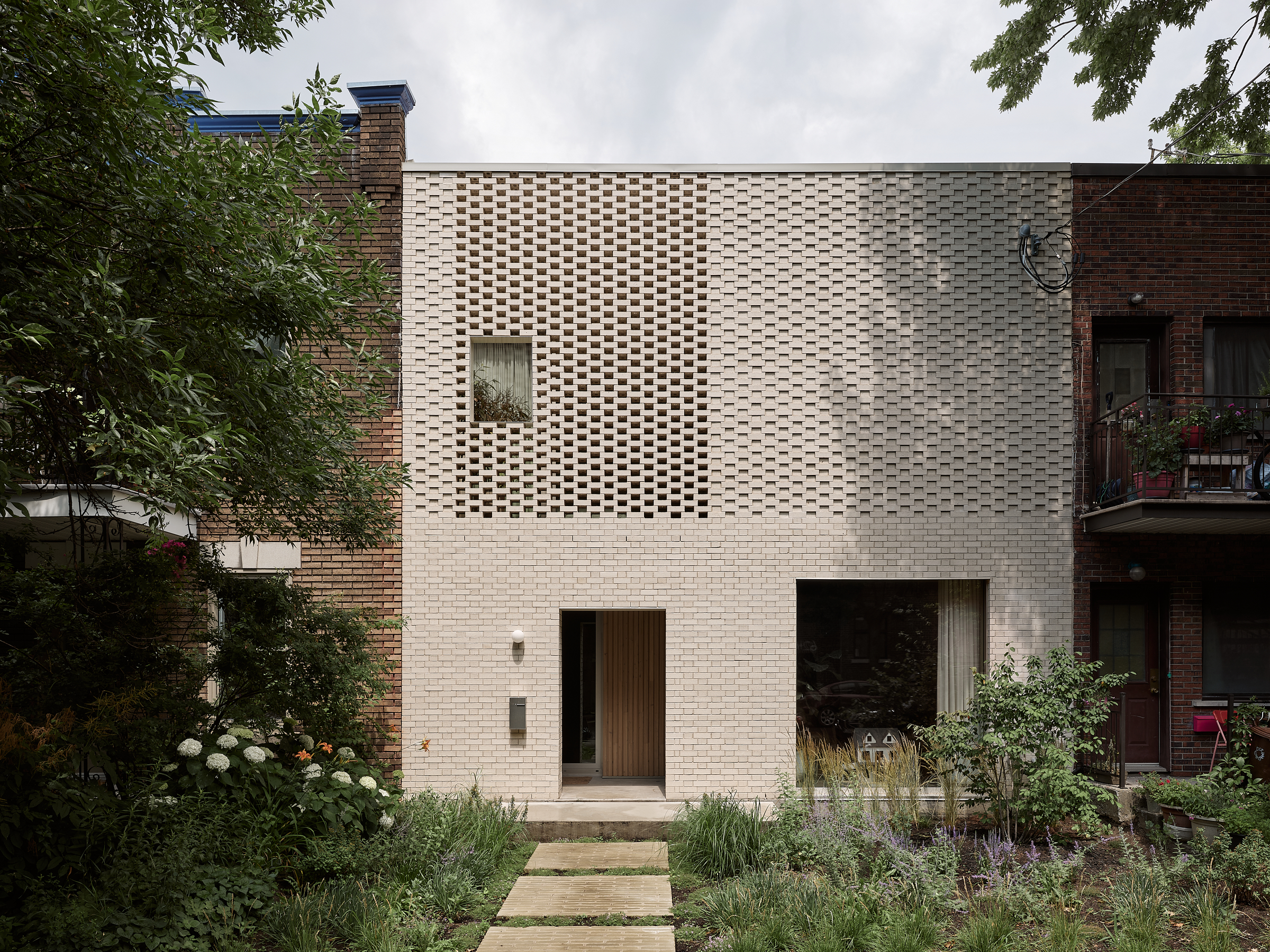
In Montreal’s Rosemont neighbourhood, a family-oriented neighbourhood with a mix of housing typologies, La Shed Architecture has re-envisioned an early-20th-century home that nods both to its origins and the vacillating urban eclecticism.
Maison Drolet, originally built in 1911 and featuring a red columned exterior, had undergone a series of additions and renovations meant to maximise the lot, yet it did not fit the scale of its neighbours nor provide functional interiors. While some of these shoebox homes, named for their boxy massing, require preservation, the structure had few significant architectural details and didn’t require such conservation efforts.

The concept, which is based on the ideas of multiple vertical plans that run the length of the lot, separates the living spaces for varying degrees of exposure and acts as a response to the client’s desire for distinct spaces.


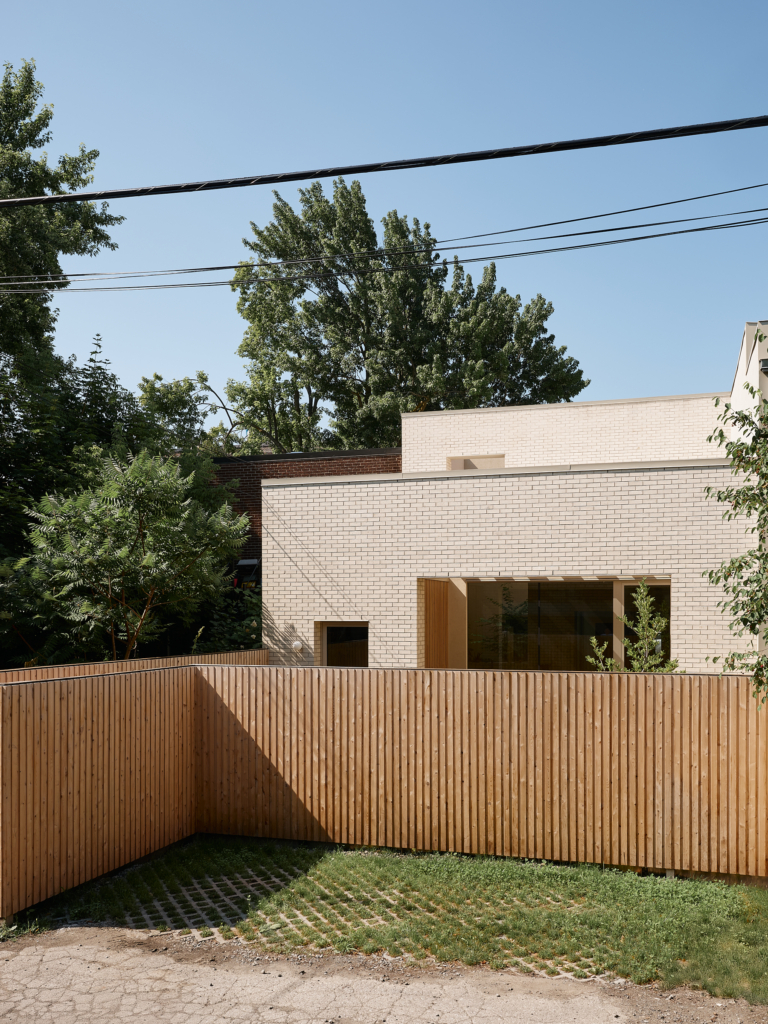
Instead, La Shed Architecture worked with the owners to develop programming and an elevated facade that took the one-storey form and transformed it with a front two-storey addition, interior courtyard and minimal palette.
The home’s layered interventions were a source of inspiration, as well as reinterpreting the existing structure. “We did their first home a few years ago,” says architect Pierre-Alexandre Lemieux. “For us, it was an opportunity to work with this kind of typology that we see quite often in Montreal.”
The home wasn’t in the best shape and didn’t have any details which would signal character; therefore, the architects planned to honour its history through its front profile. Like many of its brick-clad neighbours, the home now has a patterned brick facade to delineate the new addition in a soft beige hue that reads both fresh and modern. Because the neighbourhood is mixed with commercial traffic nearby, the clients wanted privacy with an entry concealed within a loggia, while careful consideration was given to direct sightlines.


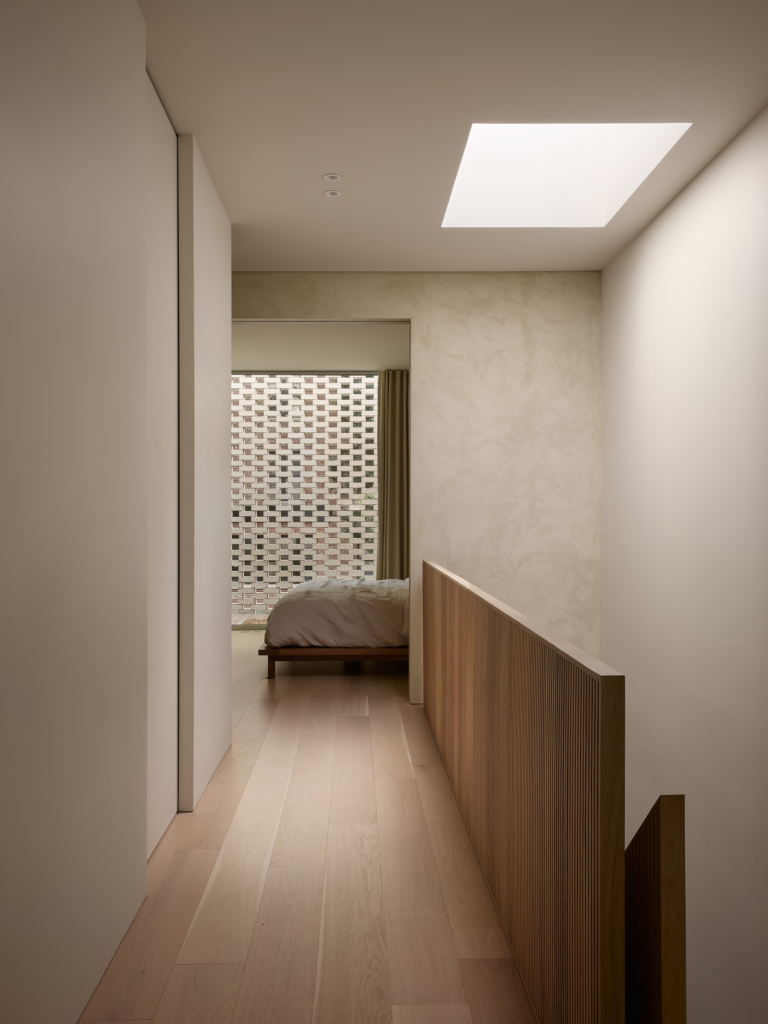
The addition, which is two levels and focused on the front of the home, includes primary living spaces awash in lime plaster and white oak, and features a connecting timber staircase. The concept, which is based on the ideas of multiple vertical plans that run the length of the lot, separates the living spaces for varying degrees of exposure and acts as a response to the client’s desire for distinct spaces.
On the upper floor, the primary suite features dappled light from the perforated brick screen and a private outdoor terrace offers a moment of solitude within the dense urban environment. Additionally, a planted interior courtyard captures natural light and provides a harmonious environment.
As Lemieux says, “Drolet House asserts a contemporary architecture while weaving a delicate dialogue with its Montreal context. From its harmonious insertion into the streetscape to the sensitive reinterpretation of the heritage shoebox typology, each architectural gesture reflects a respectful anchoring within the existing urban fabric.”